The best window-mounted ventilation fan depends on whether you prioritize simple reversible airflow, multiple ventilation modes, or a low-profile fit. The Comfort Zone 3-speed model with a bug screen is a practical choice for bedrooms, while the shinic rotating-head fan offers several airflow directions. For a low-profile design with electronic reversal, consider the Vornado TRANSOM. Compare window dimensions and control preferences before choosing.
| Product | Best For | Key Feature |
|---|---|---|
| Comfort Zone 3-Speed With Bug Screen | Bedrooms and offices | Three speeds and manual reversal |
| shinic Rotatable Window Fan | Flexible airflow setups | Adjustable fan-head direction |
| Vornado TRANSOM, Black | Low-profile installation | Electronic reversal and four speeds |
| Comfort Zone 3-Mode With Remote | Remote-controlled operation | Cool, circulate, and exhaust modes |
| shinic 2026 Remote-Control Fan | Convenient kitchen or bathroom ventilation | Three modes and remote control |
Comfort Zone 3-Speed Fan With Bug Screen
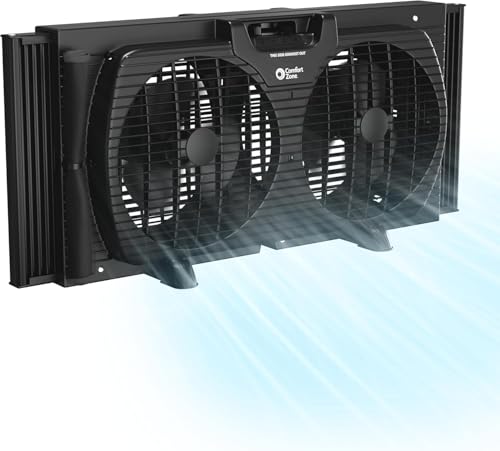
This dual-fan model is best for bedrooms and home offices where adjustable airflow and a bug screen are priorities. It has low, medium, and high speeds, plus a described whisper-quiet setting for sleeping or focused work. Its manually reversible airflow can bring outdoor air in or exhaust hot, stale air and humidity.
The auto-locking accordion expanders adjust from 22-1/4 to 33 inches wide and are designed for most double-hung windows. Choose this model if you want straightforward controls and reversible ventilation. One limitation is that airflow direction is changed manually rather than electronically.
shinic Rotatable Window Fan

This shinic fan is best for buyers who want to direct airflow in more than one way. Its two fan heads can be adjusted to provide dual cooling, dual exhaust, or simultaneous intake and exhaust. A three-speed knob provides manual control.
The adjustable width is 21.65 to 33.27 inches, and the product is described for horizontal or vertical installation in sliding windows. Rigid and accordion expanders support the fit, with the rigid panels intended to add stability when mounted vertically. Choose this model when configurable airflow matters more than remote operation. Its controls are manual, so it may be less convenient if you want to change settings from across the room.
Vornado TRANSOM Window Fan, Black
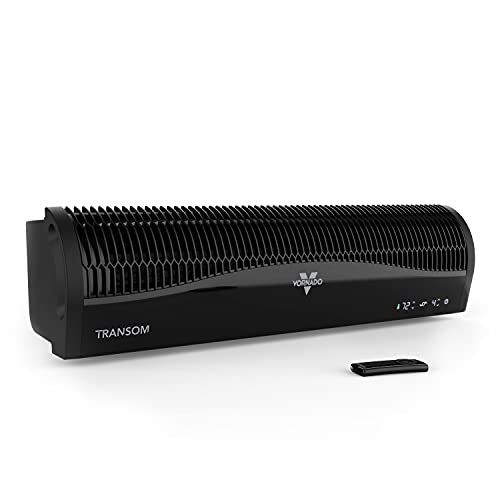
The Vornado TRANSOM is best for buyers seeking a low-profile window fan with electronic airflow reversal. A button switches between drawing in outdoor air and exhausting indoor air. Four speeds provide more airflow settings than the two-speed or three-speed options in several other picks.
Its Soft-fit foam block system is designed for single- or double-hung windows 26 to 40 inches wide, with an opening at least 8 inches tall. The product features a weather-resistant case and remote control. Choose it if a low-profile form and button-operated reversal suit your window setup. Confirm the window width and opening height before buying; its stated fit range may not match narrower windows.
Comfort Zone 3-Mode Fan With Remote

This Comfort Zone model is best for buyers who want several operating modes and remote control. Its three speeds support different airflow levels, while cool mode brings air inward, exhaust mode removes stale air, and circulate mode runs the blades in opposing directions. The listed package features also include a fabric cover and bug screen.
Its accordion expanders adjust from 23-1/2 to 37 inches and lock in place. Choose this fan if you need a wider stated fit range than the 22-1/4-to-33-inch Comfort Zone model above. The limitation is that it is not a low-profile TRANSOM-style unit; measure the available window space and compare its installation format with your opening.
shinic Remote-Control Window Exhaust Fan

This shinic model is best for buyers who want remote-operated ventilation for a bathroom or kitchen. It offers three modes for bringing air in, exhausting indoor air, or exchanging air with the outdoors. Three speeds—low, medium, and high—provide additional adjustment, and the product description highlights smoother, quieter operation.
The stated adjustable width is 23.8 to 37 inches. The remote uses two AAA batteries, which are not included. Choose this fan if remote access is important and your window falls within the specified width. Avoid assuming that batteries come in the package.
Buying Guide: How To Choose A Window Ventilation Fan
Which airflow mode do you need?
For cooling, look for an intake mode that draws outdoor air into the room. To remove hot or stale indoor air, choose an exhaust mode. A circulate setting can run opposing fans to move air in different directions. Some models require manual adjustment; others switch modes with a button or remote.
How do you check window fit?
Measure the usable opening before choosing a fan. Compare its width with the product’s stated adjustment range, and check height requirements where provided. Expanders, foam blocks, and rigid panels differ by model, so do not assume that one fan’s installation system or window orientation applies to another.
Do speed settings and controls matter?
More speeds provide additional airflow choices, but control style can be just as important. Manual switches and knobs are direct; remote controls let users change settings from a distance. If the fan will run near a bed or workspace, check whether its listed features specifically describe a quiet setting.
What extra features should buyers compare?
Bug screens, removable covers, and fabric covers can matter depending on the room and how the window is used. Check which accessories are listed for the exact model. If the fan is intended for a bathroom or kitchen, consider whether intake, exhaust, or both functions fit the ventilation task.
Frequently Asked Questions
Can a window fan both bring air in and exhaust it?
Yes. The products listed here offer intake and exhaust functions. Depending on the model, users change direction manually, adjust the fan heads, or use an electronic control.
Should I measure my window before buying?
Yes. Compare the window’s usable width—and any stated height requirement—with the product’s adjustment range before ordering.
What is the difference between exhaust and circulate mode?
Exhaust mode moves indoor air out. Circulate mode uses opposing fan directions to move air through or around the room, as described for select models.
Do window fans include remote batteries?
Not necessarily. The shinic remote-control model listed here requires two AAA batteries, and its product features state that batteries are not included.
Can every window fan be installed vertically?
No. Installation orientation depends on the product. The shinic rotatable model is described for horizontal or vertical sliding-window installation; check each model’s stated fit before purchase.