If you need reliable flow-based control for irrigation, water treatment, or HVAC systems, a sprinkler water flow switch can help automate pumps and valves based on actual water flow. This guide highlights five top options, explains who they’re best for, and shows where each shines or falls short. Ideal buyers include homeowners building simple irrigation automation, contractors setting up industrial or commercial water systems, and DIY enthusiasts seeking safer, more energy-efficient setups. A quick comparison table follows to help you compare key points at a glance.
| Product | Best For | |
|---|---|---|
| Niiyen PDT R3/4 HFS-20 | Small to mid-size irrigation and water treatment setups | Adjustable set point; SPDT output |
| DIGITEN FS-C02 G3/4″ | Brass, robust installations; safety shutoff in water systems | Brass body; 3/4″ BSP thread; dual compatibility |
| Solimeta HFS-20 R3/4 | Industrial or high-temperature environments requiring IP54 | IP54 protection; adjustable paddles |
| Orbit 57623 Anti-Siphon Valve | Backflow prevention in irrigation and culinary lines | Atmospheric vacuum breaker; anti-siphon design |
| POTTER VSR-4 | Fire safety and large-diameter pipe monitoring | Vane type flow alarm for 4″ pipe |
Niiyen PDT R3/4 HFS-20 Water Flow Switch

Best for compact, reliable flow switching in water treatment and central cooling systems. The Niiyen HFS-20 uses a paddle mechanism with SPDT output and a 15A, 250V rating. Flow control is adjustable, delivering stable repeat action points when the rate exceeds the set value. Suitable for non-hazardous liquids, it can be integrated into circuits to automatically start or stop a secondary device. Caution: ensure the connected load stays within SPDT limits to avoid contact wear.
ECO-WORTHY Fresh Transfer Diaphragm Water Pump On Demand

While primarily a pump, this unit includes an on-demand diaphragm pump with a pressure switch set to 70 PSI, useful for irrigation systems requiring automatic on/off based on downstream demand. Best for homes or small sheds needing steady water pressure without manual intervention. Better for discrete boosting tasks than for precise flow-switch duties; consider it if you also need a pumping solution with integrated pressure control.
POTTER VSR-4 Vane Type Water Flow Alarm Switch

Best for large-diameter pipes where early detection of abnormal flow is critical. The VSR-4 uses a vane-type design to monitor flow in a 4″ pipe, serving as a primary alarm device in fire safety and industrial water systems. It emphasizes reliability and prompt alerts for potential issues. Limitation: purpose-built for larger pipes; may require adapters or different mounting for smaller lines.
DIGITEN FS-C02 G3/4″ Flow Switch

Best for robust, safety-focused water systems in which a flow switch must shut off a device like a heater or pump when water is not present. The brass body and 3/4″ BSP male thread provide durability and broad compatibility. Choose this if you need a dependable, easy-to-install switch that can handle higher temperature and pressure conditions. Caution: ensure a relay is used when wiring loads to prevent direct current draw on the switch contacts.
Solimeta HFS-20 Red Flow Switch
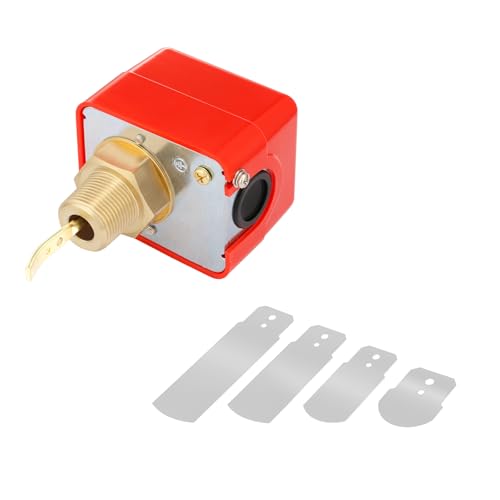
Best for adjustable flow control with IP54 protection and high reliability. Solimeta’s HFS-20 features stable repeat action points and a broad operating temperature range. It’s suitable for environments where protection from dust and moisture is necessary. Limitation: plan for downstream valve control to avoid water hammer; a throttle or pressure relief may improve performance in rapid shutoff scenarios.
Buying Guide: Key Purchase Considerations
What type of flow switch should you choose?
- paddle-type vs. vane-type: Paddle types generally offer compact form factors and smooth operation; vane types are better for larger pipes and more visible flow cues.
- material and IP rating: Brass bodies provide durability; IP54 rating helps resist dust and splashes in harsh environments.
- electrical output: SPDT outputs enable simple on/off control; ensure the load is within the switch’s contact rating or add a relay.
What installation and compatibility considerations matter?
- pipe size: match the flow switch to the pipe diameter you’re monitoring (e.g., 3/4″ vs 4″).
- threading and adapters: verify BSP vs NPT compatibility; use appropriate adapters if needed.
- downstream devices: plan for relays or drivers to handle motors, pumps, and solenoids without overloading the switch.
What are common limitations to expect?
- response time: some switches have slower actuation depending on paddle design and pipe flow dynamics.
- leakage risk: ensure proper seals when installing in irrigation or chemical environments; use suitable sealants or gaskets.
- protection against water hammer: consider throttling or downstream valves to prevent pressure surges when switching off.
Frequently Asked Questions
- What is a sprinkler water flow switch used for?
- Which material is best for a water flow switch?
- Do I need a relay with the flow switch?
- Can a flow switch be used with any liquid?
- How do I choose between paddle and vane switches?
- What maintenance is required?
It automatically controls electrical devices (pumps, valves) based on detected water flow to improve irrigation efficiency and system safety.
Brass is common for durability and corrosion resistance, but IP-rated plastic options can work in less demanding settings.
Yes, most switches have SPDT outputs and cannot drive high-current loads directly; a relay isolates the switch from the load.
Most are designed for water or non-hazardous liquids; avoid corrosive or hazardous fluids unless specified by the manufacturer.
Choose paddle types for compact installations and precise point control; choose vane types for larger pipes and easier flow visualization.
Check seals and mounting integrity periodically; ensure downstream valves or quick-closing devices do not cause rapid pressure surges without throttling.