Answering the popular buyer question: which spray foam solutions best block rodents? This guide highlights five effective options for sealing gaps and keeping mice and other pests out. Each product is suited for different homes, from whole-house gaps to small wall penetrations. The top picks emphasize pesticide-free barriers, strong adhesion, and long-lasting seals. Use this overview to match the right foam to your needs, whether you’re tackling a single entry point or fortifying an entire perimeter.
| Product | Best For |
|---|---|
| Tomcat Rodent Block Expanding Foam Barrier (12 oz) | General gap sealing for homes and basements |
| [Upgraded] Rodent Barrier Kit (PAMAZY) | Medium to large holes with steel wool and foam |
| Tomcat Rodent Block Expanding Foam Barrier, 12 oz. (2-Pack) | Multiple gaps or larger installations |
| ASKIZ Rodent Block Spray Foam (12×16.9 oz) | Comprehensive wall and pipe gaps |
| Pest Block Spray Foam (1x12oz) SPRAYMAN | Odor-free, easy application for living spaces |
Tomcat Rodent Block Expanding Foam Barrier, 12 oz.
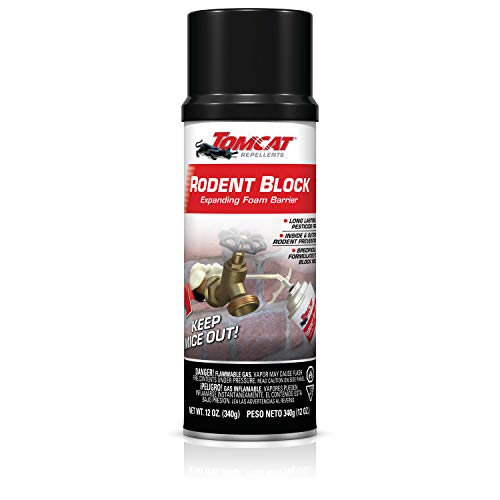
Best for: homeowners filling small-to-medium gaps where mice commonly enter. This pesticide-free foam forms an airtight, water-resistant seal to most building materials, creating a long-lasting barrier against rodents. The foam expands to fill cracks and voids, making it a straightforward option for DIY installs around baseboards, utility penetrations, and attic entry points. Caution: surface prep improves adhesion; avoid applying on damp surfaces for best results.
[Upgraded] Rodent Barrier Kit (PAMAZY)

Best for: homes needing a combined steel wool and foam approach for medium to large gaps. This kit blends thick, flexible steel wool fibers with a spray PU foam that expands to fill entry points, then hardens into a barrier resistant to gnawing. The steel wool deters chewing, while the foam seals gaps. Choose this if you’re addressing multiple openings and want a reinforced, multi-layered defense. Limitation: larger installations may require more time to apply two materials correctly.
Tomcat Rodent Block Expanding Foam Barrier, 12 oz. (2-Pack)

Best for: households needing to seal multiple gaps with a pesticide-free barrier. The 2-pack provides value for broader protection around doors, pipes, and crawlspace openings. The foam offers long-lasting adhesion, forming a sturdy seal against mice and other intruders. Caution: fit and trim the foam after curing for a cleaner finish near living areas.
ASKIZ Rodent Block Spray Foam (12×16.9 oz)

Best for: comprehensive wall, floor, and pipe gaps with a two-pronged barrier. This formulation is designed to block entry while making a repellant aroma mice dislike, adding a deterrent dimension. It dries rigid and can be trimmed, sanded, and painted, giving flexibility for various interior finishes. Limitation: optimal performance occurs within a specified temperature range, so plan around moderate ambient conditions for best curing.
Pest Block Spray Foam – (1x12oz) SPRAYMAN

Best for: odor-free, quick-to-apply gaps around walls, windows, and doors. The foam expands rapidly to seal gaps and cracks, forming a durable, weather-resistant barrier. It’s UL-certified for safety and performance, making it suitable for DIY projects in living areas. Caution: as with all strong foams, avoid over-expansion near delicate finishes or electrical boxes to prevent interference or mess.
Buying Guide
What to consider when choosing rodent-proof spray foam:
- Scope of gaps: For a few small gaps, single cans like Tomcat 12 oz may suffice. For larger projects, kits combining foam with steel wool provide stronger barriers.
- Material safety: Look for pesticide-free formulations when possible, especially for living spaces and homes with children or pets.
- Adhesion and expansion: High-adhesion foams reduce voids; consider kits that pair steel wool with foam for medium to large openings.
- Temperature range: Some foams perform best within specific temperatures; plan installations during appropriate weather for optimal curing.
- Finish and trim: If the sprayed area is visible, choose foams that can be trimmed, sanded, or painted to match décor.
- Odor and repellence: Some products include repellents to deter mice beyond sealing; useful in heavily infested or exposed spaces.
Practical tips for using spray foam to block rodents
- Prep surfaces: Clean, dry, and dust-free gaps improve adhesion.
- Apply in layers: For irregular gaps, apply in increments to control expansion.
- Finish touches: Trim excess foam after curing for a neat look and better paint adherence.
- Safety: Use gloves and ventilation when applying foams; follow manufacturer instructions.
Frequently Asked Questions
- Can spray foam really block mice? Yes, when properly applied, it fills gaps and creates a barrier that mice cannot easily gnaw through.
- Is odor-free spray foam better for homes? Odor-free formulations are preferable for living spaces to minimize lingering smells during and after installation.
- Should I combine steel wool with foam? Combining steel wool with foam is effective for medium to large gaps, as steel wool deters gnawing while foam seals entry points.
- What temperature is ideal for applying foam? Most foams cure best within moderate temperature ranges; check the product’s recommended range for best results.
- How long does curing take? Curing times vary by product; follow the label for optimal strength and adhesion before exposing the area to stress.
- Can foam be painted? Many foams can be trimmed, sanded, and painted to blend with walls after curing.