Solar hybrid air conditioning can mean an air conditioner supported by solar panels, batteries, and an inverter—or solar-powered ventilation that reduces heat without providing air conditioning. The products below are components and ventilation alternatives, not complete central or room AC systems. The Anjfylque inverter is best suited to larger split-phase setups, while the Anern is a lower-output option for 230V systems. Solar attic fans can help exhaust hot air, but they do not cool a room like an air conditioner.
| Product | Best suited for | What it does |
|---|---|---|
| Anjfylque 12000W inverter | Higher-power 120V/240V systems | Converts and manages solar and battery power |
| Anern 6500W inverter | Off-grid 220–230V setups | Combines inverter and solar charging functions |
| GDFStudio solar attic fan | Attics and outbuildings | Moves hot air; includes supplemental power |
| HJJKLTOPU compressor | Vehicle or marine refrigeration projects | Cooling component, not a complete AC system |
| Solar Blaster RoofBlaster | Basic solar roof ventilation | Solar-powered roof vent fan |
Anjfylque 12000W Split-Phase Hybrid Inverter

This 48V inverter provides 120V/240V split-phase pure sine wave output and is designed for residential and light commercial energy storage systems. Its dual MPPT trackers accept solar input up to 500V VOC, and listed battery support includes lithium and lead-acid types with CAN and RS485 BMS communication.
Best for: Buyers planning a higher-output solar-and-battery system that may supply compatible air-conditioning equipment alongside other household loads. It was selected because its split-phase output and 12,000W rating are relevant to larger home backup designs.
Limitation: This is an inverter, not an air conditioner or a complete solar package. Panels, batteries, wiring, and system design are separate considerations.
Anern 6500W 48V Hybrid Solar Inverter
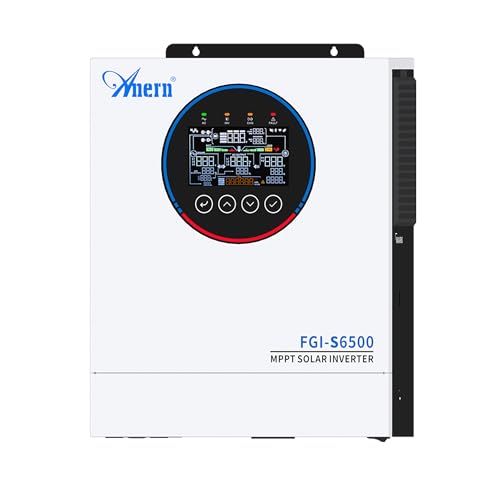
The Anern combines a 6500W inverter, a 120A MPPT solar charge controller, and a battery charger. It has a 48V DC input, 220–230V single-phase output, and a stated maximum PV array power of 9000W. The listing says it can operate without a battery and supports lithium, lead-acid, and gel batteries.
Best for: Off-grid buyers whose equipment and electrical design use 220–230V single-phase output and who want inverter and charging functions in one unit. It is a lower-output alternative to the Anjfylque model.
Limitation: Its listed output is not 120V/240V split phase. Confirm that the output voltage and load requirements match the intended AC equipment before planning a system.
GDFStudio 42W Solar Attic Fan

This ventilation fan uses a 42W monocrystalline solar panel and a DC brushless motor. The listed airflow is 1800 cubic meters per hour. Its dual-power design prioritizes solar energy and includes an adapter for supplemental power on cloudy days or at night.
Best for: Owners seeking to exhaust hot, humid, or stale air from an attic, greenhouse, garage, barn, or shed. It is relevant to solar cooling plans as a ventilation measure that can reduce heat buildup in those spaces.
Limitation: Ventilation is not refrigeration. This fan does not provide the same temperature control as an air conditioner, and its effectiveness depends on installation and airflow conditions.
HJJKLTOPU 12V/24V Cooling Compressor

This 12V/24V compressor is described for car refrigeration, marine, and solar applications. The listing highlights low noise and vibration, adjustable cooling capacity, and R134a. These details make it a potential component for specialized refrigeration projects rather than a conventional home air-conditioning solution.
Best for: Buyers researching a DC-powered vehicle or marine cooling project who need a compressor component and can verify the rest of the system requirements.
Limitation: The product description does not establish that this is a complete air conditioner or specify all installation requirements. Check refrigerant-system compatibility and technical details before purchase.
Solar Blaster RoofBlaster Vent

The Solar Blaster RoofBlaster is a solar roof ventilation product with a 5-watt panel. The listing notes easy installation and says a warranty is included, without providing further details in the supplied features.
Best for: Buyers looking for a basic solar roof vent to support ventilation rather than a powered AC system. Its small listed panel makes it a distinct, simpler option compared with the 42W attic fan.
Limitation: The supplied product information does not state airflow capacity or provide detailed performance specifications, so compare those details with the space and ventilation goal.
Buying Guide: Choosing Solar Hybrid Air Conditioning Components
Do you need an air conditioner or ventilation?
An air conditioner removes heat from indoor air through a refrigeration cycle. A roof or attic fan moves air and can help remove accumulated heat, but it does not actively chill a room. Choose a fan for ventilation needs; choose an appropriately sized AC system for controlled indoor cooling.
What inverter output does your equipment require?
Check the air conditioner’s voltage, phase, and electrical load before selecting an inverter. The Anjfylque is listed for 120V/240V split-phase output; the Anern is listed for 220–230V single-phase output. These are not interchangeable assumptions. Have a qualified installer evaluate starting loads and system wiring.
How should you compare solar and battery capacity?
An inverter rating alone does not determine how long an AC system can run. The solar array, battery capacity, sunlight, operating schedule, and total electrical demand all affect performance. Match the inverter’s PV and battery specifications to the planned equipment, and verify the complete system design before installation.
When is a DC compressor appropriate?
A DC compressor may suit a specialized vehicle, marine, or refrigeration project, but the listing does not identify it as a complete air-conditioning unit. Confirm the required components, refrigerant specifications, controls, and installation details for the intended application.
Frequently Asked Questions
Can a solar attic fan replace an air conditioner?
No. An attic fan ventilates and exhausts air; it does not provide the active cooling of an air-conditioning system.
Does a hybrid solar inverter include solar panels?
The listed inverter products are inverter and charging equipment. The supplied product details do not say that solar panels are included.
Which inverter is listed for 120V/240V output?
The Anjfylque 12000W inverter is listed with 120V/240V split-phase output. The Anern is listed for 220–230V single-phase output.
Can solar power run an air conditioner at night?
Solar panels produce energy from sunlight. Nighttime operation generally requires stored energy or another power source; system runtime depends on battery capacity and electrical demand.
Are these products complete solar AC systems?
No. The inverters, fans, and compressor are components or ventilation products. The listings do not establish that any one item is a complete solar air-conditioning system.