Answer: These compact pressure washers deliver reliable cleaning power for cars, patios, driveways, and fences without heavy setup. They’re ideal for small spaces, light-to-moderate jobs, and quick touch-ups. The top picks below suit different buyers: DIY homeowners needing portability, car enthusiasts seeking gentle yet effective spray, and renters requiring lightweight devices for balcony or patio cleaning. The table shows a quick comparison of five models to help choose at a glance.
| Product | Max PSI | Water Flow | |
|---|---|---|---|
| Westinghouse ePX3100v | 2100 PSI | 1.76 GPM (max); 1.2 GPM rated | Portable cleaning around cars and decks |
| CRAFTSMAN CMEPW1700 | 1700 PSI | 1.2 GPM | Light outdoor cleaning and quick jobs |
| ZestZenith Cordless Portable Washer | 990 PSI | Unknown listed GPM | Battery-powered flexibility for patios and cars |
| LWQ Pressure Washer | 2.5 GPM (max) | Unknown listed GPM | Versatile multi-surface cleaning |
| Westinghouse ePX3500 | 2500 PSI | 1.76 GPM (max); 1.2 GPM rated | More power in a compact form |
Westinghouse ePX3100v Electric Pressure Washer

Best for: small-space cleaning on cars, fences, and patios. This model delivers up to 2100 max PSI and 1.76 max GPM, with an 18-pound, compact profile. A built-in carry handle simplifies transport between tasks and storage. The detachable foam cannon aids heavy-duty cleaning when detergents are needed. The design favors users who need a portable, easy-to-store washer without sacrificing basic power.
Why chosen: It balances weight, power, and portability. The 20-foot Easy-coil hose helps reach modest cleaning zones without multiple extensions. Best for quick, everyday tasks where space is at a premium.
Caution: Performance is strongest at lower-to-mid PSI settings; at higher pressure, nozzle wear and foam cannon use may affect results on delicate surfaces.
CRAFTSMAN Electric Pressure Washer CMEPW1700

Best for: homeowners needing a compact, easy-to-use cleaner for cars, driveways, and garages. It offers 1700 PSI and 1.2 GPM, with an onboard storage design that keeps nozzle, hose, cord, and wand organized. The included soap applicator bottle supports cleaning with detergents for more stubborn grime.
Why chosen: It emphasizes user-friendliness and portability without sacrificing essential cleaning power. The integrated storage helps keep outdoor cleaning gear tidy and ready.
Caution: Lower PSI compared to larger models means it’s less effective on very tough, heavy-duty grime or concrete stains.
ZestZenith Cordless Portable Washer
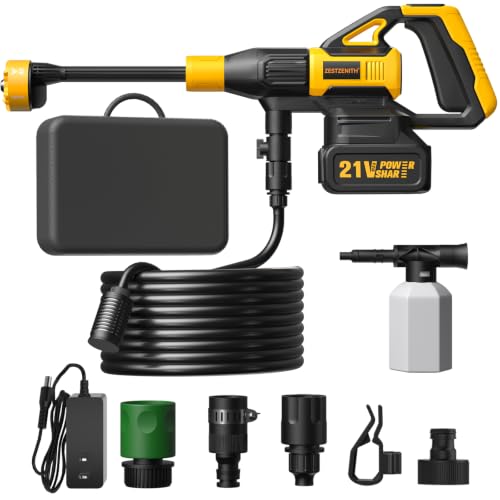
Best for: car owners and light outdoor cleaning where cords are inconvenient. This 990 PSI cordless unit includes a 21V battery and a 6-in-1 nozzle with a foam pot to create suds for easier grime lifting. A 23-foot hose increases reach for patios and vehicles.
Why chosen: The cordless design offers true portability for tasks away from outlets. It’s suitable for quick spot cleaning between larger projects.
Caution: Lower pressure limits effectiveness on heavily soiled surfaces; plan for smaller jobs or use with detergent for best results.
LWQ Pressure Washer

Best for: multi-surface cleaning around homes with a need for a higher water flow. It features up to 2.5 GPM flow and includes four quick-connect nozzles plus a foam cannon, making it versatile for cars, fences, driveways, patios, and machinery.
Why chosen: The combination of higher water flow and a complete nozzle set supports more demanding cleaning in fewer passes. The moving-roller design improves mobility and stability for steady use.
Caution: Wheels and anti-tipping features help, but heavier use may still require careful handling to prevent tip-overs on uneven ground.
Westinghouse ePX3500 Electric Pressure Washer
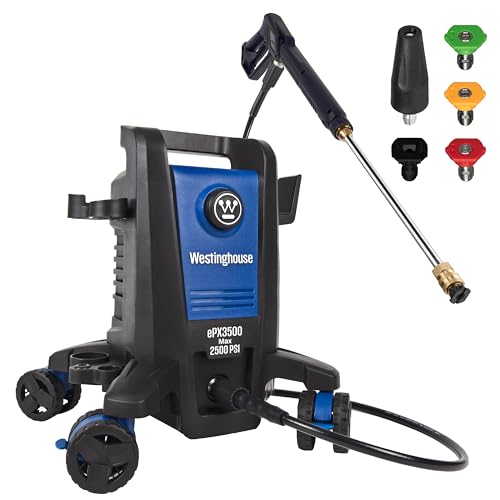
Best for: users needing more power in a compact form for tougher tasks, like heavy-duty deck cleaning or stubborn driveway stains. It pushes up to 2500 PSI with 1.76 max GPM and includes a 17.5-inch extendable wand and a 20-ounce onboard soap tank.
Why chosen: Anti-tipping wheels with a low center of gravity improve stability during use, while onboard soap support simplifies applying detergents for durable cleaning power.
Caution: Higher PSI requires careful nozzle selection on delicate surfaces to avoid damage; store and transport with attention to the extended wand length.
Buying Guide
What should you look for when choosing a small water pressure washer?
- Intended tasks: For car washing and light patio cleaning, 1200–1800 PSI is often sufficient. For tougher driveway grime, consider 2000–2500 PSI.
- Flow rate (GPM): Higher GPM reduces cleaning time. Match GPM to the surface and dirt level you expect to encounter.
- Portability: Look for built-in handles, light weight, and compact designs if you need to move the unit frequently or store it in small spaces.
- Accessories: Nozzles, foam cannons, and soap tanks expand cleaning versatility. Quick-connect nozzles speed up switching between tasks.
- Power source: Electric units are generally quieter and easier to maintain than gas, with lower ongoing costs. Corded versus cordless models affect range and runtime.
- Stability and safety: Anti-tipping features and sturdy wheels help when cleaning on uneven surfaces or stairs.
FAQ
- What PSI is best for a small home cleaning job? For general outdoor cleaning, 1500–2000 PSI is a versatile range that handles siding, patios, and vehicles without excessive surface damage.
- Are cordless models as effective as corded ones? Cordless washers offer portability but often have lower PSI and run-time; choose based on task duration and access to outlets.
- Do I need a foam cannon? A foam cannon helps apply detergent evenly and can be beneficial for vehicles and heavy grime on decks or driveways.
- Can I use household bleach or cleaners with these washers? Only use cleaners specified by the manufacturer; improper chemicals can damage the unit or surfaces.
- How should I store a small pressure washer? Keep it dry, away from extreme temperatures, and coil hoses neatly to prevent kinks or damage to fittings.
- Is a higher PSI always better? Not necessarily. Higher PSI can damage soft surfaces such as wood, vinyl, or painted surfaces; choose nozzle settings and PSI appropriate for the task.