The best RV heating and air conditioning system depends on your rig’s size, roof setup, power supply, and preference for quiet operation. The TOSOT is a strong fit for smaller RVs and light sleepers; the FOGATTI InstaCool Ultra suits buyers seeking a quiet, non-ducted unit; and the TUSOMA offers high cooling capacity with heat-pump heating. The options below compare rooftop systems for different needs, followed by a practical guide to choosing one.
| Product | Best For | Key Detail |
|---|---|---|
| TOSOT 16,000 BTU | Smaller RVs and quiet operation | 43 dB; heat pump |
| FOGATTI InstaCool Ultra | Non-ducted replacements | 43 dB; low-profile design |
| TUSOMA 18,000 BTU | Higher cooling capacity | Heat pump; dual power connection |
| RecPro 15K | Lower-amp RV setups | Ducted or non-ducted option |
| TURBRO Finnmark 15K | Wi-Fi controls and electric heat | 15,000 BTU cooling |
TOSOT 16,000 BTU Rooftop AC

This TOSOT unit combines 16,000 BTU cooling with a 12,500 BTU heat pump. It is listed for RVs 16 to 24 feet long, including Class B and C vehicles, travel trailers, and teardrop campers. The manufacturer states that it operates in ambient temperatures from 23°F to 115°F.
Best for: Owners of smaller RVs who prioritize quieter operation. Its stated 43 dB noise level may appeal to light sleepers and families. Choose it if you want a rooftop unit with Wi-Fi and remote control as well as heat-pump warmth for mild weather.
Limitation: The heat pump is described as best for shoulder seasons, so buyers needing substantial heat in very cold weather should consider their existing furnace and climate needs.
FOGATTI InstaCool Ultra 16K

The FOGATTI InstaCool Ultra is a non-ducted rooftop air conditioner with cooling and heat-pump functions, Wi-Fi, and remote control. Its listed dual-motor, triple-fan system delivers 418 CFM airflow, and the product details state an EER of 11.8. The unit is specified for a 14.25-by-14.25-inch roof cutout.
Best for: RV owners replacing or selecting a non-ducted system who value a quieter unit. Its stated operating noise is 43 dB. It may also suit shoppers looking for a low-profile design and included sealing material.
Limitation: The listing says it is compatible with most RVs except ducted systems. Confirm the roof opening, ceiling thickness, electrical requirements, and system type before choosing it. It requires a 15- or 20-amp time-delay fuse or circuit breaker.
TUSOMA 18,000 BTU Heat-Pump AC

TUSOMA lists 18,000 BTU cooling and 10,236 BTU heating capacity for this non-ducted rooftop unit. The manufacturer states that it is designed for spaces up to 680 square feet and RVs from 16 to 40 feet long. It uses R32 refrigerant and is intended to provide cooling plus supplemental heat-pump warmth.
Best for: Buyers prioritizing higher listed cooling capacity and a heat-pump option. It may be a better fit for larger RVs than the 16,000 BTU choices, subject to the RV’s layout and insulation.
Limitation: This model requires both a 115V AC power source and a 12V DC power supply to operate correctly. Check that both are available in the intended installation.
RecPro 15K Ducted Or Non-Ducted AC

The RecPro 15K is offered in ducted or non-ducted configurations and provides cooling with a heat pump. Its listed features include a low-amp draw, UV-resistant plastic, and an aerodynamic exterior. The stated operating noise is 55.4 dB.
Best for: RV owners comparing ducted and non-ducted installations, or those looking for a unit described as suitable for solar, generator, or off-grid setups. Choose the correct configuration for the RV’s existing air distribution system.
Limitation: The supplied product information does not specify heating capacity or cooling coverage. Confirm those figures and electrical requirements for the exact configuration before purchase.
TURBRO Finnmark 15K Rooftop AC
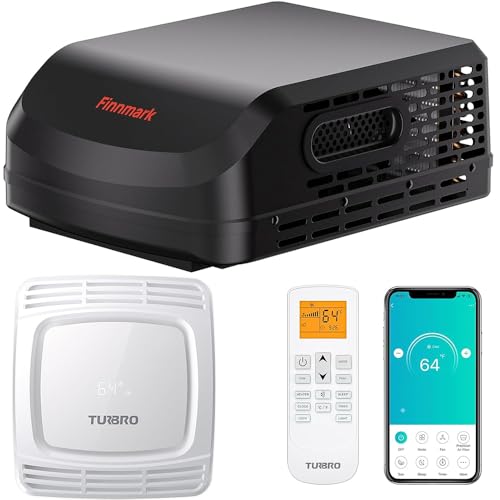
The TURBRO Finnmark provides up to 15,000 BTU cooling and 1,500W electric heating. It also includes fan and dry modes, Wi-Fi app control, a remote, and multicolor LED mood lighting. The stated roof-opening requirement is 14.25 by 14.25 inches, and the product listing gives a 9.6 EER rating.
Best for: RV owners who want app-based controls and electric heating in one rooftop unit. Its listed modes offer alternatives to cooling, while recessed lift handles are intended to make handling easier during setup.
Limitation: The heating specification is given in watts rather than BTU. Compare the stated 1,500W output with your heating needs and existing furnace before relying on it as the primary heat source.
Buying Guide: How To Choose RV Heating And Air Conditioning
How much cooling capacity does your RV need?
Start with the manufacturer’s recommended RV length or coverage area, then account for floor plan, insulation, windows, and local climate. A higher BTU rating does not guarantee even comfort in every layout. Compare the unit’s stated capacity with your RV rather than selecting by BTU alone.
Do you need ducted or non-ducted installation?
Ducted systems distribute air through ceiling passages, while non-ducted units deliver air from the ceiling assembly. Match the product configuration to your RV’s existing setup. Check roof-opening dimensions and ceiling thickness, and verify whether installation hardware or sealing material is included.
Is a heat pump enough for cold-weather camping?
Heat pumps can provide electric warmth, but listed heating capacity and operating conditions differ by model. Some products describe heat-pump use as best for mild or transitional weather. If you camp in freezing conditions, check operating-temperature limits and plan around the RV’s furnace or another suitable heat source.
What power and noise details should you compare?
Confirm voltage, amperage, circuit protection, and any separate 12V DC requirement. These details affect whether the unit suits your electrical setup. For a quieter sleeping space, compare the manufacturer’s stated decibel levels, while remembering that installation and operating conditions can affect perceived noise.
Frequently Asked Questions
Can an RV air conditioner also heat?
Some rooftop units include a heat pump or electric heater. Check the specific model’s heating type and capacity; cooling-only units will not provide heat.
What is the difference between a heat pump and electric resistance heat?
A heat pump transfers heat, while an electric resistance heater produces heat directly. The products above list different heating approaches and capacities, so compare their specifications for your climate.
Can I replace a ducted RV AC with a non-ducted unit?
Not automatically. Verify the RV’s air-distribution design, roof opening, and the replacement unit’s compatibility before buying. One listed FOGATTI model specifically excludes ducted systems.
Why does an RV rooftop AC need both AC and DC power?
Some models require both a 115V AC source and a 12V DC supply for correct operation. Check the product instructions and your RV’s available electrical connections.