Choosing the right reverse flow check valve helps protect RO systems, purifiers, and beverage setups from backflow and contamination. This guide highlights five reliable options, describing who they’re best for, plus practical buying considerations. The top picks include compact automotive- and kitchen-friendly models, as well as heavier-duty water-treatment check valves. Ideal buyers range from DIY homeowners to small-scale operators needing dependable, leak-free performance.
Summary table of selected products:
| Product | Best For | Key Benefit | Note |
|---|---|---|---|
| ESHIONG 1/4″ Push to Connect One Way Check Valve | Home RO systems, DIY enthusiasts | Leak-free, tool-free installation | NSF/ certifications, BPA free |
| iSpring ACV4 Check Valve | Many RO setups | Quick-connect, compatible with many brands | Simple inline installation |
| 1/4″ Check Valve — Filtration Warehouse | RO installations needing clear direction | Locking clips for secure fit | Meets common plumbing requirements |
| Metpure 3/8″ Quick Connect Check Valve | Beverage, food service, RO systems | Food-grade materials, leak-free design | Wide application |
| Malida 1/4″ Quick Connect Check Valve | Under-sink RO purifiers | Multiple-pack option | Simplified installation |
ESHIONG 1/4″ Push to Connect One Way Check Valve

Best for DIY RO projects and compact installations. This valve uses POM (polyoxymethylene) and is food-grade, BPA-free. It is NSF, TUV, and SGS certified, which supports its suitability for drinking-water applications. The straight 1/4″ to 1/4″ OD tube design and push-fit connection simplify installation without tools. It provides a straightforward, leak-free one-way flow control for RO lines.
Who it’s for: homeowners wiring a small RO system or hobbyists who want quick, tool-free setup. Why selected: strong emphasis on safety-grade materials and certified standards. Caution: push-to-connect fittings can require precise tube preparation to ensure a snug, leak-free seal.
iSpring ACV4 Check Valve for Reverse Osmosis

Best for RO systems where compatibility across brands matters. The iSpring ACV4 features a 1/4″ quick-connect fitting with a plastic insert check valve. It is designed to be installed on the outlet port of a membrane housing, where purified water exits. This check valve is intended to be compatible with most reverse osmosis systems and-brand configurations, making it a solid choice for multi-brand setups.
Who it’s for: installers seeking a flexible, brand-agnostic option for RO housings. Why selected: straightforward compatibility and quick-connect design can speed up maintenance. Caution: verify that the valve’s flow direction matches the system’s arrow indicator to ensure correct operation.
Filtration Warehouse 1/4″ Check Valve

Best for RO systems needing a secure, directional flow with robust attachment. This inline, straight check valve uses a one-way flow design. It includes two locking clips for a secure connection, which helps maintain a leak-free seal under typical system pressures. It is designed to meet common plumbing requirements for reverse osmosis installations to prevent backflow of purified water into the system.
Who it’s for: users who value a strong mechanical lock for connections and clear directional flow. Why selected: the locking clips add redundancy to prevent accidental disconnections. Caution: ensure the arrow direction aligns with the actual flow to avoid misinstallation.
Metpure 3/8″ Quick Connect Check Valve

Better for beverage and water-treatment systems requiring a larger connection. The Metpure check valve features a 3/8″ quick-connect interface with a polypropylene body and stainless steel teeth, plus EPDM O-rings. It is designed to prevent backflow and provide a leak-free performance with a durable build. Suitable for RO and other water-appliance applications, including outlets of filtration systems, refrigerators, and beverages.
Who it’s for: professionals and DIYers who need a higher-flow, longer-life valve. Why selected: food-grade components and stainless-steel teeth support reliable operation in water systems. Caution: ensure compatibility with your tubing size and confirm the 3/8″ fitting matches your tubing ID.
Malida 1/4 Inch Quick Connect Check Valve
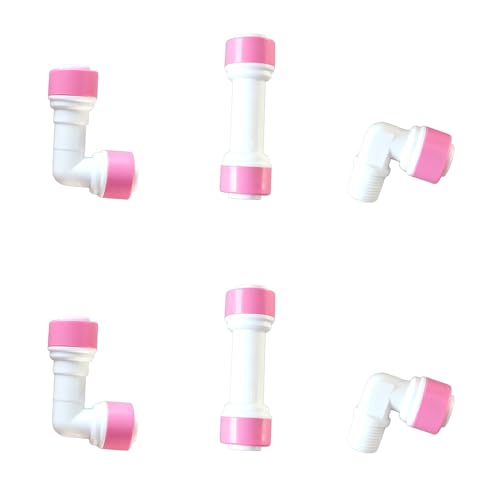
Best value-pack option for RO purifiers and home systems. The Malida set includes multiple 1/4″ quick-connect check valves suitable for under-sink installations. It emphasizes POM construction suitable for water, coffee, and similar uses, offering straightforward replacement options for common RO lines.
Who it’s for: budget-conscious buyers needing multiple valves for future expansion or spare parts. Why selected: the 6-pack format ensures ready availability. Caution: verify that your tubing OD and push-fit connectors match the valve’s specifications to prevent leaks.
Buying Guide: How to Choose the Right Reverse Flow Check Valve
- Flow direction and size: Match the valve’s port size to your tubing (common sizes are 1/4″ and 3/8″). Ensure the valve arrow aligns with the system’s flow direction to prevent backflow.
- Materials and safety: For drinking-water applications, seek BPA-free plastics (like POM) and food-grade components. Certifications (NSF/TUV/SGS) add assurance for water quality.
- Connection type: Push-to-connect, quick-connect, or locking-clips designs affect installation speed and reliability. Choose based on your DIY comfort and the need for secure connections under pressure.
- Compatibility: Consider whether the valve will fit your membrane housing, RO purifier, or beverage appliance. Some valves are designed for universal RO systems, others for more specific setups.
- Leak prevention: Look for locking mechanisms or robust O-rings that reduce the risk of leaks, especially in systems with higher pressures or frequent use.
- Maintenance and replacement: Availability of spare parts and the ease of replacing a valve can influence total cost of ownership.
Comparator Tips
- For quick DIY installs, prioritize push-to-connect options that require no tools.
- When installing near membrane housings, verify the outlet orientation to avoid backflow into the system.
- If you operate multiple RO stages or beverage lines, a multi-pack valve like Malida can reduce downtime and parts stocking.
Frequently Asked Questions
- What is a reverse flow check valve used for in RO systems? It prevents backflow of purified water into the feed line, protecting the system from contamination.
- Which material is best for drinking-water valves? Food-grade plastics such as POM are common. Look for BPA-free construction and certifications (NSF/TUV/SGS).
- Do I need a 1/4″ or 3/8″ valve? Choose based on your tubing size and existing fittings. Most home RO systems use 1/4″ fittings, but some larger lines use 3/8″.
- Are quick-connect valves reliable? Yes, when properly seated and matched to tubing. Ensure no burrs and correct insertion depth to prevent leaks.
- Can I install these valves without tools? Many push-to-connect and quick-connect models are tool-free, but some installations may require basic tools for secure mounting.
- What should I inspect after installation? Look for leaks at the connection points and verify the system maintains proper pressure without backflow signs.