Direct answer: If you want to reduce sound and light transfer between rooms while maintaining good air flow, choose a return air pathway with an integrated baffle or noise-dampening features. These products are best for bedrooms, home offices, nurseries, and media rooms where privacy and quiet are priorities. The top options below balance airflow with sound dampening, making them suitable for different wall types and installation needs. The table summarizes key choices to compare at a glance.
| Product | Best For | Key Benefit |
|---|---|---|
| QuietCool Zone Air Pathway ZAP (14×8) | Bedrooms, doors kept closed | Integrated baffle minimizes light and sound transfer |
| QuietCool ZAP (14×8) Linear Bar Grille | Wall-to-wall venting with bar grille | Compact design with privacy by design |
| Suprocky Wall Return Air Pathway Kit (12×4 Retrofit) | General airflow balance | Durable, easy installation |
| Otoolling 14×8 Return Air Pathway Vent Kit | Rooms needing strong sound/light blocking | Acoustic baffle and high airflow |
| Suprocky Eco-Friendly PP Filter Pathway (14×8) | Environmentally mindful setups | Aluminum grille with improved fins and odor control |
QuietCool Zone Air Pathway (ZAP) 14″ x 8″ — Return Air Pathway

Best for: those who want privacy with minimal light and sound transfer when a door is closed. This model includes an inner baffle to reduce light leakage and dampen sound, while maintaining adequate airflow through a wall-to-wall vent. It is well-suited for bedrooms or guest rooms where quiet is essential and larger openings are needed.
Why chosen: The integrated baffle design helps limit both noise and light transfer without requiring additional components. Suitable for doorways in bedrooms or small home offices where occupants desire privacy.
Limitation: Installation requires a compatible wall opening; verify wall thickness and cutout before ordering.
QuietCool ZAP Linear Bar Grille — 14″ x 8″

Best for: walls or doorways where a linear bar grille provides a clean aesthetic while offering return air with privacy. The integrated design reduces light transmission and helps minimize sound transfer when the door is closed.
Why chosen: The linear bar grille style blends with modern interiors and supports quiet operation. It’s a solid choice when you want a sleek look and effective sound dampening.
Limitation: Slightly limited in airflow uniformity compared to some two-piece kits; ensure the wall cavity supports the installation.
Suprocky Wall Return Air Pathway Kit with Filter (12″x 4″ Retrofit)

Best for: homeowners seeking a straightforward, durable in-wall vent solution to balance indoor air pressure and improve HVAC efficiency. The kit includes a retrofit frame, making it suitable for renovations or new installations on sidewalls.
Why chosen: It provides stable air circulation and is easy to install without jump ducts. The two-piece metal frame expands for easier fitting, and a durable finish resists corrosion.
Limitation: The 12×4 size may be smaller than some living spaces require; verify your wall cutout and required airflow before purchasing.
Otoolling 14×8 Return Air Pathway Vent Kit
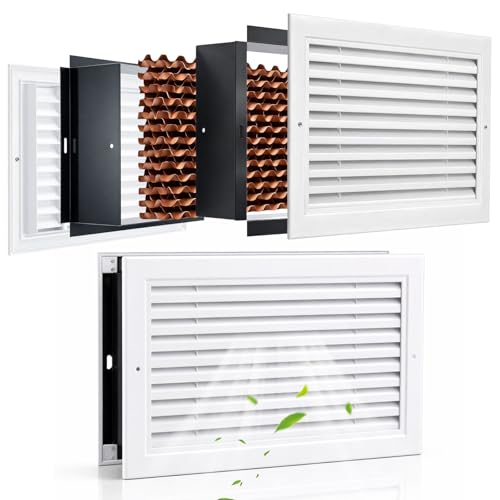
Best for: spaces where a high emphasis on sound and light blocking is needed. The kit features a built-in acoustic baffle and an adjustable angle to fine-tune privacy and airflow, making it ideal for bedrooms, home theaters, or offices.
Why chosen: It blocks up to a high percentage of light and reduces sound transfer, with an airflow opening large enough to prevent HVAC strain. The design supports compatibility with sidewalls 3″–6″ thick.
Limitation: Installation requires wall cutouts and careful alignment of the baffle angle to maximize effectiveness.
Suprocky Wall Return Air Pathway With Eco-Friendly PP Filter

Best for: readers prioritizing environmental considerations alongside durable airflow control. The aluminum grille with a matte white finish and PP filter provides moisture resistance and eco-friendly materials.
Why chosen: The wider fins simplify cleaning and improve micro-ventilation while reducing odor transfer. This option balances performance with sustainable materials for wall installations.
Limitation: The focus on eco-friendly materials may trade a small amount of airflow customization compared to more modular kits; confirm your room’s airflow needs if you require maximum control.
Buying Guide
What should you check before buying a return air sound baffle product?
- Wall compatibility: Confirm cutout size and wall thickness to ensure a proper fit for 14″x8″ or 12″x4″ kits.
- Sound and light blocking: Look for integrated acoustical or baffle features that explicitly reduce noise and light transfer.
- Airflow performance: Compare opening size and design, as larger openings deliver better airflow and reduce HVAC strain.
- Material and finish: Choose durable materials (aluminum, steel) and finishes (matte white) that resist corrosion and suit your décor.
- Installation complexity: Some kits are tool-free or simple retrofits; others may require professional installation.
- Maintenance: Consider ease of cleaning, especially when fins or louvers are involved.
Frequently Asked Questions
- What is a return air pathway with a sound baffle?
A return air pathway is a vent that returns air to the HVAC system. A sound baffle is a built-in feature that reduces noise and often light transfer between rooms.
- Which size should I choose for a standard wall opening?
14″ x 8″ is common for many retrofit projects, but always measure your wall cutout first.
- Can these kits improve HVAC efficiency?
Yes, by balancing indoor and outdoor air pressure and reducing HVAC strain, they can improve overall system efficiency.
- Do all options block light as well as sound?
Many models include light-blocking features; check the product description for the percentage of light control or dedicated baffles.
- Are these suitable for nurseries or bedrooms?
Yes, several models are designed for rooms requiring privacy and quiet, such as bedrooms, nurseries, and home theaters.
- What maintenance is required?
Regularly inspect louvers or fins and clean dust buildup to maintain airflow and noise reduction.