The best quiet 12V air compressor depends on its job: the California Air Tools 12V1P10S is a strong choice when low noise and a tank matter, while ZHSYMX models suit onboard air, horns, and suspension systems. The Siftary 444c is listed for heavy-duty use, and the GSPSCN portable inflator is better suited to tire top-offs. Compare noise claims, pressure, connections, and intended use before choosing.
| Product | Best For | Listed Noise | Key Detail |
|---|---|---|---|
| California Air Tools 12V1P10S | Quiet portable air with a tank | 56 dB | 1-gallon steel tank |
| ZHSYMX 1/4 NPT 300 PSI | Onboard vehicle air | 69 dB | 20-amp draw listed |
| ZHSYMX 3/8 NPT 300 PSI | Onboard setup with included bracket | 69 dB | Mounting bracket included |
| Siftary 444c 12V Kit | Heavy-duty air systems | 14.4 dB claimed | 120 PSI, 36 L/min listed |
| GSPSCN Portable Tire Inflator | Portable tire inflation | Not specified | 150 PSI maximum listed |
California Air Tools 12V1P10S

Best for: Drivers who prioritize quiet operation and want an air tank in a portable 12V compressor. California Air Tools lists a noise level of 56 decibels, lower than the 69 dB specified for the ZHSYMX models in this guide.
The unit has a 1-gallon steel tank, a 12V supply designed for standard car-battery operation, and an oil-free pump. The oil-free design is listed as requiring less maintenance and cost. These details make it a distinct option for buyers seeking a tank-equipped compressor rather than a compact onboard pump.
Limitation: The supplied product details do not state maximum pressure, airflow, or duty cycle. Confirm those specifications and that the tank capacity fits your intended tools or accessories before buying.
ZHSYMX 1/4 NPT 300 PSI

Best for: Vehicle owners building an onboard air setup for a train horn, air-ride suspension, tires, or air tools. Its listed maximum working pressure is 300 PSI, and the product details specify 12V operation and a 20-amp draw.
ZHSYMX lists a 69 dB noise level, horizontal cooling fins, and a trapezoidal head design. The listing also describes an all-in-one design with a mounting bracket and a stainless-steel braided leader. Choose this model if the 1/4-inch NPT connection suits your planned plumbing and accessories.
Limitation: The listed 20-amp draw means buyers should check their vehicle’s electrical setup and follow the manufacturer’s installation instructions. The supplied details do not provide an airflow rate or duty cycle.
ZHSYMX 3/8 NPT 300 PSI
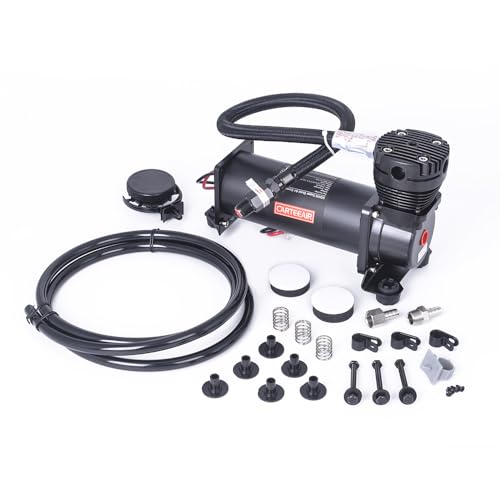
Best for: Buyers who want an onboard compressor with a mounting bracket and need to compare a 3/8-inch connection option. The product is described for air horns, air-ride suspension, tires, and air tools, and its listed noise level is 69 dB.
This model shares the 300 PSI maximum-pressure claim and vehicle-focused use cases of the other ZHSYMX compressor. Its all-in-one design is described as including a mounting bracket, while the listing refers to a standard 1/4- or 3/8-inch stainless-steel braided leader. Check the exact connection on the unit against your system before purchase.
Limitation: The supplied features do not specify amperage, airflow, or duty cycle for this model. Do not assume those figures match another compressor based only on a similar brand or pressure rating.
Siftary 444c 12V Heavy-Duty Kit

Best for: Buyers comparing a 12V compressor for train horns, air horns, or pneumatic suspension. Siftary lists a 120 PSI maximum working pressure, a maximum flow rate of 36 liters per minute, and a permanent-magnet motor intended for continuous, stable operation.
The listing describes alloy-steel construction with chrome plating and claims a 14.4 dB operating noise level. That figure is much lower than the other listed noise figures here, but it is a manufacturer-provided claim, not an independently verified comparison. The kit is described as a replacement for specified Air Lift system numbers; verify fitment and system requirements before ordering.
Limitation: Its maximum pressure is listed at 120 PSI, substantially below the 300 PSI claims for the ZHSYMX options. Choose based on the pressure your application requires, not the noise claim alone.
GSPSCN Portable Tire Inflator

Best for: Drivers seeking a portable 12V tire inflator rather than a permanently mounted air-ride or horn compressor. Its double-cylinder design is listed with a 150 PSI maximum pressure and a 70 L/min airflow rate. The listing also includes an 11.5-foot power cord and an 11.5-foot air hose.
GSPSCN describes the direct-drive motor as compact, stable, and quiet, but does not provide a decibel rating. It lists compatibility with many passenger vehicles and other equipment, including SUVs, vans, RVs, motorcycles, and bicycles. This makes it a better match for portable inflation than for buyers requiring a specified sound level.
Limitation: “Quiet” is not quantified in the supplied features, so buyers who need a measured noise level should compare other options. Confirm the product’s fit for your particular tire and use.
Buying Guide: How To Choose A Quiet 12V Air Compressor
What will you use the compressor for?
Start with the task. A portable tire inflator is designed for inflation convenience, while onboard compressors are commonly listed for air horns, suspension systems, and air tools. A tank-equipped model offers a different setup from a compact onboard unit. Match the product’s stated purpose to your application instead of treating every 12V compressor as interchangeable.
How quiet does it need to be?
Compare stated decibel figures only as listed, and remember that the supplied descriptions do not establish that every figure was measured under the same conditions. California Air Tools specifies 56 dB and ZHSYMX specifies 69 dB. Siftary claims 14.4 dB, an unusually low figure relative to the other listings; seek clarification if noise is a deciding factor. GSPSCN does not provide a decibel figure.
Which pressure and connection do you need?
Maximum pressure is not the same as airflow or suitability for a particular accessory. Compare the required operating pressure, connection type, and the compressor’s other specifications. The listed ZHSYMX models claim up to 300 PSI, the Siftary kit lists 120 PSI, and GSPSCN lists 150 PSI. Check NPT size and system requirements before installation.
What should you check before installation?
Review voltage, current draw, mounting space, electrical requirements, cooling, and any required tank or fittings. One ZHSYMX listing specifies a 20-amp draw, while the other product descriptions do not provide comparable amperage details. Verify missing specifications with the manufacturer and follow vehicle and product instructions.
Frequently Asked Questions
What is the quietest 12V compressor in this selection?
California Air Tools lists its 12V1P10S at 56 dB, the lowest clearly comparable noise figure among the products. Siftary claims 14.4 dB, but that figure is manufacturer-provided and should be verified before relying on it.
Is a 300 PSI compressor always better?
No. Maximum pressure is only one specification. Select a compressor that meets your application’s pressure, airflow, connection, electrical, and duty-cycle requirements.
Can a portable tire inflator power an air-ride system?
Do not assume so. The GSPSCN is presented as a portable tire inflator, while ZHSYMX and Siftary specifically list suspension or onboard-air uses. Check the intended application and specifications.
What does NPT mean when choosing a compressor?
NPT identifies a type and size of threaded pipe connection. Match the compressor’s listed connection to the fittings and air system you plan to use.
Why check amperage before buying a 12V compressor?
Amperage affects the electrical requirements of the installation. Check the compressor’s stated draw and confirm that your vehicle wiring and power source meet the manufacturer’s instructions.