Finding the right air filter for a paint booth reduces overspray, protects downstream equipment, and helps maintain a healthier workshop. This guide highlights five top options that fit common booth setups and address different filtration needs. The selections are best for professional painters, hobbyists upgrading their booths, or shop managers seeking reliable replacement pads and rolls. Use the accessible comparison below to choose filters that balance trapping efficiency, airflow, and installation practicality.
| Product | Best For | Key Benefit |
|---|---|---|
| 1) Demiwise 20″ x 120″ Vent Filters | Home workshops and small spaces | High dust capture with easy edge mounting |
| 2) Master Elite 20″ x 20″ Filter Pads (Box of 50) | downdraft/crossdraft booths requiring rigid pads | Heavy fiberglass media for strong overspray trapping |
| 3) AUC 20″ x 20″ Tacky Intake Pads | Intake filtration with tackifier for debris control | Two-layer design with internal frame for stability |
| 4) Podoy 16″ x 7-1/4″ 5-Pack Filters | Compact or smaller booths and versatile fit | Double-layer high-density filtration |
| 5) Master Elite 20.5″ x 100′ Filter Roll | Large-volume booths needing continuous filtration | Long roll with heavy fiberglass media for extended use |
Demiwise 20″ x 120″ Vent Filters

Best for: small to midsize home studios and budget-conscious shops needing long, cut-to-fit vent filters. These filters use 100% non-woven polyester with an incremental density structure that captures particles as small as 2.0 microns. They offer quick dust absorption and high holding capacity due to dense electrostatic media, while remaining 0.5 inches thick to avoid restricting airflow. This balance makes them suitable for general ventilation in paint booths where intake efficiency matters as much as filtration.
Why selected: The combination of high particle capture, large surface area, and a slim profile helps maintain consistent airflow while reducing contaminants entering the booth. The 0.5-inch thickness minimizes pressure drop, which can improve booth exhaust balance over longer runs. Best for buyers prioritizing simple, cut-to-fit installation with reliable filtration.
Caution: Installation tape and adhesive hook tape are included, but fit quality depends on vent size accuracy. Ensure measurements align with your duct openings to prevent gaps that reduce filtration efficiency.
Master Elite Premium Paint Spray Booth Exhaust Filter Pads (20″ x 20″)

Best for: automotive refinish shops and professional spray booths needing reliable crossdraft compatibility. This box of 50 pads uses an 18-gram fiberglass media that traps overspray effectively, offering durable filtration across multiple sessions. The standard 20″ x 20″ size fits many exhaust filter racks and crossdraft/downdraft configurations, delivering strong paint particle capture while maintaining airflow.
Why selected: The heavier fiberglass media delivers solid overspray trapping, helping protect downstream equipment and improve filter life in busy booths. The box quantity supports frequent replacements without frequent repurchasing, appealing to shop managers who value consistency and cost-per-use. Choose this if you prioritize proven filtration capacity in standard booth footprints.
Caution: As with all fiberglass-based pads, handling should avoid excessive dust disturbance. Inspect for edge fraying before installation to ensure a tight seal.
AUC Tacky Intake Filter Pad Series 55, 20″ x 20″

Best for: booths that require high intake filtration with tackified debris capture. The Series 55 panels use 100% polyester media with non-migrating tackifiers and an 11-gauge internal frame, delivering improved adsorption and frame stability. The two-ply design combines a porous outer layer with a tacky interior to trap both large and fine particles.
Why selected: The internal frame and tackifier approach provide robust structure and reliable debris retention, reducing the risk of bypass and maintaining consistent intake filtration. This makes it a better choice for shops needing strong intake protection without frequent filter changes.
Caution: The tackifier can attract dust more aggressively; ensure proper handling to avoid excessive buildup that could impede airflow. Confirm compatibility with your exact housing frame before purchasing.
Podoy Airbrush Spray Booth Filter 5-Pack

Best for: compact spray booths or hobbyist setups needing flexible filter sizing. Each filter measures 16″ wide by 7-1/4″ high by 7/8″ thick, offering a lightweight option that still delivers effective filtration. The 5-pack provides a practical replacement cadence for smaller studios or intermittent use.
Why selected: The filters feature a double-layer high-density design that offers solid toughness and stable airflow. This helps sustain booth performance in limited spaces where larger pads are not feasible, balancing filtration efficiency with ease of installation.
Caution: Compatibility is best confirmed by measuring your booth’s filter housing. Some booths may require slightly different dimensions, so verify before purchase.
Master Elite Premium Paint Spray Booth Exhaust Filter Roll

Best for: large booths with continuous filtration needs and long-running jobs. The roll measures 20.5″ x 100′ and uses an 18-gram fiberglass media for heavy-duty paint trapping. This format is suited for dusty work environments or shops preferring to replace only sections of roll as needed.
Why selected: Rolling filters provide continuous coverage and reduce downtime between replacements. The fiberglass media offers strong overspray control, helping protect exhaust systems and maintain booth performance over extended periods.
Caution: Rolls require compatible housing and proper alignment to avoid gaps. Unrolling and cutting should be done with care to prevent tearing that could compromise filtration.
PRISTAIR Spray Booth Capture Filter (20×20, 50/case)
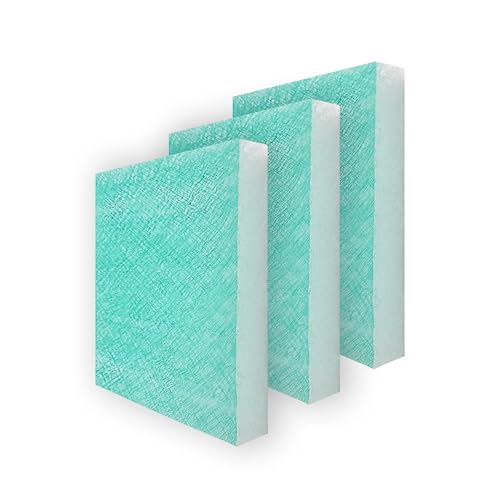
Best for: booths needing a high-efficiency fiberglass exhaust filter pad with clear directional use. The 15g fiberglass media captures ≥95% of paint particles, aligning with environmental standards and protecting downstream equipment. The color-coded sides help identify intake versus outlet orientation quickly.
Why selected: The green side facing the spray booth and the white side facing the outlet simplifies installation and reduces setup errors. The pad’s high tack and large dust-holding capacity support longer service life in demanding environments.
Caution: Color coding is helpful, but always verify airflow direction in your specific booth to avoid misalignment that could reduce effectiveness.
PRISTAIR Paint Spray Booth Tacky Intake Filter Pad 20″ x 20″

Best for: booths that require reliable dirt capture with a tacky surface to hold debris in place. The 100% polyester media is bonded to an 11-gauge internal frame, delivering a rigid, self-sealing gasket design. The tacky panel helps debris stay put, reducing bypass risk.
Why selected: This design prioritizes intake filtration stability, making it better for shops that want consistent debris capture without frequent reseal issues. The internal frame reinforces the filter bank, maintaining integrity under airflow.
Caution: The tacky surface can accumulate dust quickly; monitor for buildup that could restrict airflow and plan replacements accordingly.
AUC Paint Booth Exhaust Filters, 20″ x 20″ (50/case)

Best for: shops seeking standard-sized exhaust filters that fit a wide range of crossdraft and downdraft booths. The 15-gram fiberglass media captures overspray efficiently, helping protect equipment downstream and extend filter life.
Why selected: The 20″ x 20″ pad format is a common fit in many booths, and the fiberglass construction provides solid filtration performance for typical shop use. The green—white color orientation supports correct installation.
Caution: Actual dimensions can vary slightly from stated; verify housing compatibility and fit before purchase to avoid gaps that reduce filtration effectiveness.
Buying Guide
- Filter media type matters: Fiberglass pads trap overspray well, while polyester and tacky panels excel at particle capture and static adherence. Choose based on your booth’s typical overspray and debris profile.
- Size and fit: Measure your booth’s filter openings carefully. Common sizes include 20″ x 20″ and 20″ x 120″; use cut-to-fit options for unusual housings to minimize airflow bypass.
- Airflow balance: Filtration should not excessively restrict airflow. Look for pads with moderate thickness (around 0.5″ for vent filters) to maintain balanced intake and exhaust.
- Installation ease: Tape, gaskets, and internal frames influence ease of replacement and seal integrity. Internal frames improve bank stability in high-flow booths.
- Maintenance cadence: Consider pack sizes (box of 50 vs 5-pack) and roll lengths for your replacement schedule to reduce downtime and costs.
- Direction and orientation: Some products use color codes or tacky surfaces that require correct orientation for maximum efficiency. Follow manufacturer guidelines for intake vs exhaust placement.
FAQ
- Q: What filter type best reduces paint overspray in spray booths?
A: Fiberglass exhaust filter pads and dense double-layer polyester panels are commonly effective for capturing overspray while supporting airflow. - Q: How often should these filters be replaced in a busy shop?
A: Replacement frequency depends on usage, booth size, and environmental conditions. Plan replacements based on visible buildup and manufacturer recommendations. - Q: Do I need to replace entire pads when switching brands?
A: Not always. Some booths support cross-compatible pads, but verify dimensions and frame compatibility before mixing brands. - Q: How do I install these filters without damaging the frame?
A: Use the provided installation tape or gaskets as directed, ensure a snug seal around the housing, and avoid bending or tearing fragile media during placement. - Q: Can I use these filters for residential painting setups?
A: These products are designed for spray booths and may be overkill for simple home projects. Check airflow requirements and ensure safe clearance for your space. - Q: Are there color-coded options to help with orientation?
A: Yes. Some products indicate intake versus outlet sides with color coding or labeling to simplify correct installation.