The best nitrogen flow meter for HVAC work makes it easier to confirm gas flow and control nitrogen while purging copper lines or brazing. The YESWELDER offers a stated 0–70 SCFH range; the Uniweld NitroVue emphasizes an adjustable valve and visible float; and the AWLOLWA combines a flow regulator with quick Purge, Braze, and Off settings. Choose based on the flow controls, connection details, and setup format you need.
| Product | Best For | Notable Feature |
|---|---|---|
| YESWELDER Nitrogen Flow Meter | Buyers comparing stated flow range | 0–70 SCFH scale |
| Uniweld NitroVue | Adjustable low-flow control | Visible orange float |
| AWLOLWA Nitrogen Purge Tool | Quickly switching flow modes | Three-position dial |
| RX WELD Flow Indicator | Basic visual flow confirmation | 1/4-inch SAE flare connections |
| Two-Pack Flow Indicators | Keeping a spare on hand | Two indicators included |
YESWELDER Nitrogen Flow Meter

The YESWELDER meter is best for HVAC or plumbing workers who want a stated measuring range that covers both common purging and brazing flows. Its float indicator provides a visual way to monitor nitrogen as it moves through copper tubing.
The listed range is 0–70 SCFH. Product information identifies 3–6 SCFH for brazing and 25–35 SCFH for purging, giving buyers clear reference points when setting flow. It has a 1/4-inch SAE female flare inlet and 1/4-inch SAE male flare outlet, with stated compatibility for 7/16-inch-20 male flare fittings.
Choose this if you want a broad stated range and connections specified for a standard nitrogen purging setup. Keep in mind: the listed operating pressure is 50 PSI, so confirm that the regulator and setup provide the required inlet pressure.
Uniweld NitroVue Flow Indicator

The Uniweld NitroVue is best for users who value an easy-to-read visual indicator and a precision-adjustable valve for low-flow control. Its bright orange float ball provides a visible indication of nitrogen flow, while the label is designed to make the flow indicator easier to read.
Uniweld describes purging copper lines at 20-plus SCFH, then reducing flow to 3–5 SCFH during brazing. Those stated ranges make this product a useful fit for buyers who want one indicator for both stages and prefer to adjust flow with a valve.
Choose this if an adjustable valve and visible float are priorities. Keep in mind: the supplied product details do not specify the connector dimensions, so check fitting requirements before selecting it for a particular setup.
AWLOLWA Nitrogen Purge Tool

The AWLOLWA tool is best for technicians who want to switch between purge, braze, and off settings without repeatedly adjusting a flow-indicator valve. Its quick-change dial has three positions for the different operating modes.
The listed purge setting is 25–35 SCFH at 50 PSI, and the braze setting is 3–6 SCFH at 50 PSI. The tool is designed for a 50 PSI inlet pressure and lists a maximum pressure of 200 PSI. This makes its preset-style controls a clear alternative to a meter that relies on the user to adjust flow manually.
Choose this if switching modes quickly is more important than choosing a flow from a broad meter range. Keep in mind: the listed flow settings are tied to 50 PSI inlet pressure; confirm the supply conditions before use.
RX WELD Nitrogen Flow Indicator
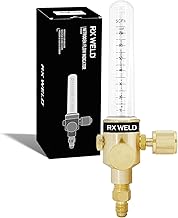
The RX WELD indicator is best for buyers looking for a straightforward visual check of nitrogen flow during copper-tubing brazing. A float inside the meter helps show whether gas is flowing, and the product is described as supporting low flow and precise control.
It has a 1/4-inch female flare inlet and a 1/4-inch male flare outlet. The listed connection details specify use with nitrogen purging applications equipped with a 7/16-inch-20 male flare. Its stated pressure is 50 PSI.
Choose this if you want a compact indicator with clearly listed flare connections. Keep in mind: the product details do not provide a numerical SCFH measuring range, so buyers needing a specified range may prefer the YESWELDER meter.
Two-Pack Nitrogen Flow Indicators

This two-pack is best for technicians who want a spare indicator available or need two flow indicators for their work. Each unit uses a transparent observation window and floating ball to provide a visual check of nitrogen flow during brazing.
The product listing specifies a 7.09-inch length, a 1/4-inch internal-thread flared inlet, and a 1/4-inch external-thread flared outlet. It identifies a 7/16-inch-20 external-thread flare component for nitrogen purging tasks. The package includes two complete sets.
Choose this if having an extra indicator is useful for your workflow. Keep in mind: the listed details do not give a specific flow range or operating pressure, so compare those requirements with your regulator and job needs.
Buying Guide: How To Choose An HVAC Nitrogen Flow Meter
Do you need a flow indicator or a preset regulator?
A flow indicator lets you monitor the float and, depending on the model, adjust flow with a valve. A preset regulator tool, such as the AWLOLWA, offers specific purge, braze, and off positions. Choose a meter for adjustable visual monitoring; choose a preset tool if quick mode changes suit your process.
What flow range should you compare?
Check that the product’s stated flow information aligns with your work. The supplied listings cite roughly 3–6 SCFH for brazing and 25–35 SCFH for purging on several models. The YESWELDER lists a 0–70 SCFH measurement range. Do not assume an unlisted range for products whose details only describe a float indicator.
Will the connections fit your setup?
Compare inlet and outlet sizes and flare types with the nitrogen regulator, hoses, and fittings already in use. Several products specify 1/4-inch SAE flare connections, but the details vary. The Uniweld listing provided here does not state connection dimensions, so verify them before purchase.
What pressure details matter?
Some products list operation at 50 PSI, while the AWLOLWA also states a maximum pressure of 200 PSI. These values are product-specific. Match the stated requirements to your regulator and follow the product instructions rather than treating one model’s pressure details as universal.
Frequently Asked Questions
What does a nitrogen flow meter do during HVAC brazing?
It helps monitor or regulate nitrogen flow through copper tubing. A visible float can confirm that gas is moving during purging or brazing.
Why use nitrogen while brazing copper tubing?
The product listings describe nitrogen purging as a way to help prevent oxidation and contamination inside copper tubing during brazing.
What flow rate is listed for brazing?
The product details commonly identify 3–6 SCFH for brazing, while the Uniweld listing specifies 3–5 SCFH. Use the instructions for the selected product and setup.
Are all 1/4-inch flare flow meters interchangeable?
No. Check the inlet and outlet gender, flare type, thread details, and regulator connection. A matching nominal size alone does not confirm that fittings will connect.
Can one tool handle both purging and brazing?
Several listed products provide flow references for both tasks. The AWLOLWA has separate purge and braze dial settings; other indicators rely on flow monitoring or adjustment.