The best choice depends on whether you need to control airflow inside a rectangular duct, create a branch connection, or limit fire spread through a duct opening. The products below cover those different jobs, but several are round-duct components rather than rectangular dampers. Check duct shape, connection size, and damper purpose before choosing.
| Product | Best suited for |
|---|---|
| 12-inch side takeoff with damper | Branching from rectangular duct to round duct |
| Dayton static vertical fire damper | A fire-damper application requiring a rectangular unit |
| 8-inch side takeoff | Round branch connections with a locking blade |
| EATAKWARD 6-inch dampers | Manual airflow adjustment in 6-inch ducting |
| Therwen 4-inch damper | Air balancing in smaller ventilation branches |
12-Inch Side Takeoff With Damper

This component creates a round branch connection from rectangular ductwork. Its integrated damper lets an installer adjust airflow through the branch, and its galvanized-steel construction is intended to resist corrosion.
Best for: HVAC projects that need to connect a rectangular trunk to a round duct while retaining a way to balance branch airflow. It is selected because it is the listed product that most directly combines a rectangular-duct connection with an integrated damper.
Limitation: This is a side takeoff, not a full rectangular inline damper. Confirm the branch diameter and rectangular duct dimensions before purchase; the name identifies a 12 STO model but does not provide complete sizing details.
Dayton Rectangular Fire Damper

The Dayton product is identified as a rectangular, static vertical fire damper. The available product information also states that it is made in the United States, but does not list dimensions, installation details, or other performance specifications.
Best for: Buyers specifically searching for a rectangular fire-damper component rather than a general airflow-balancing damper. It is included because its stated form and fire-damper purpose align most closely with a rectangular duct application.
Limitation: The provided details are sparse. Verify the required opening size, mounting arrangement, and application requirements with the product documentation and a qualified HVAC professional before selecting it.
8-Inch Side Takeoff With Locking Blade

This side takeoff is designed to connect rectangular HVAC ductwork to a round branch. Listed features include a sticky flange, rubber grommets, a locking damper blade, and a crimped small end.
Best for: Installations that need an 8-inch-style round branch connection and a blade that can be locked in position. It is a more appropriate match than a standalone round damper when the project also requires a takeoff from rectangular duct.
Limitation: The listing does not specify the rectangular opening dimensions or explain the flange installation method in detail. Confirm that the takeoff fits the existing duct and that its branch size matches the connected duct.
EATAKWARD 6-Inch Manual Dampers
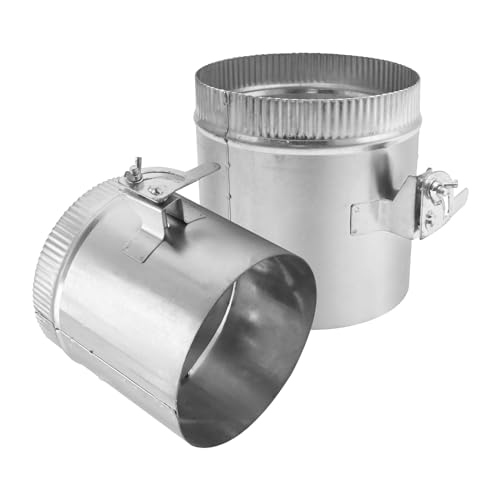
This two-piece set is intended for 6-inch ventilation ducting. The dampers use galvanized iron and a side rotating handle to adjust airflow at multiple angles. Installation involves sliding a damper into the duct, positioning it, and tightening it; the listing recommends sealing joints to reduce leakage.
Best for: Buyers balancing airflow in round branch ducts who need two manual dampers. The handle and adjustable blade make it a practical option when airflow needs to be redirected or reduced by branch.
Limitation: These are round-duct components, not rectangular dampers. Confirm the duct diameter and installation space, and seal joints as appropriate to help prevent air leakage.
Therwen 4-Inch Manual Volume Damper

The Therwen damper is a galvanized-sheet-metal sleeve for 4-inch ventilation ducting. The listing gives an interface diameter of about 3.87 inches at the bent end and about 4 inches at the other side, with a height of about 6 inches. It is intended for manual airflow balancing in branch ducts.
Best for: Smaller round ventilation branches, including applications such as range hoods or fans where the goal is to balance airflow. Galvanized iron is listed as the construction material.
Limitation: The listing states that this damper is not completely sealed and is for air balancing, not air termination. Do not choose it when a fully sealing closure is required.
Buying Guide: How To Choose An HVAC Duct Damper
Does the duct shape match the damper?
Start by identifying whether the duct is rectangular or round. A rectangular fire damper and a round branch damper perform different jobs. A side takeoff attaches a round branch to rectangular ductwork, while the EATAKWARD and Therwen products are described for round duct sizes. Do not assume that a round damper will fit directly into a rectangular duct.
Are you controlling airflow or addressing fire protection?
A manual volume damper adjusts airflow for balancing branches. A fire damper is a distinct product category intended for a fire-related duct application. These products are not interchangeable. For fire-damper selection, verify the specific application requirements and product documentation rather than relying on the product name alone.
What size and connection details should you verify?
Measure the duct opening and branch diameter before ordering. Check whether the part slides inside the duct, attaches to its surface, or connects by a sleeve or flange. The listed takeoffs do not provide complete rectangular opening dimensions, so confirm fit with the seller or product documentation.
Will the damper provide the control you need?
Choose a unit with a manual handle or adjustable blade if you need to balance airflow. Consider whether the blade can be locked in position. If the goal is to stop airflow completely, check the product’s sealing description; the Therwen listing explicitly says its damper is not completely sealed.
Frequently Asked Questions
Can a round side takeoff work with rectangular duct?
Yes. A side takeoff is designed to create a round branch connection from rectangular ductwork. Its round outlet still needs to match the connected branch duct.
Is a fire damper the same as a volume damper?
No. A volume damper adjusts airflow for balancing, while a fire damper is intended for a fire-related duct application. Select the product type for the actual job.
How do I choose between a 4-inch and 6-inch damper?
Match the damper to the duct’s measured connection size and the product’s interface dimensions. Do not select by nominal size alone if the listed measurements differ.
Can a manual duct damper completely shut off airflow?
Not necessarily. The Therwen listing says its damper is not completely sealed, so it should be used for air balancing rather than air termination.
Should duct joints be sealed after installation?
The EATAKWARD listing recommends sealing joints to help prevent air leakage. Follow the applicable product instructions and use a suitable duct-sealing method for the installation.