Answering your search for reliable heat exchanger pool heaters, this guide highlights top options for different needs. Ideal for large residential pools, spas, or saltwater systems, these selections emphasize durability, compatibility, and efficient heat transfer. Best for outdoor pools, saltwater setups, or high-chlorine environments, these products serve varied budgets and installation requirements. The overview table below helps compare key specs at a glance.
| Product | Best For | Capcity / BTU | Material | |
|---|---|---|---|---|
| AB Pool Heat Exchanger 300 kBtu | Large residential pools | 300 kBtu/hr | 316L Stainless Steel | |
| VEVOR Pool Heat Exchanger 210K BTU | Standard residential to spa heating | 210 kBTU/h | 316 Stainless Steel | |
| DEIGEHJRE Pool Heat Exchanger 200k | Budget-friendly quick heats | 200 kBtu/hr | 304 Stainless Steel | |
| AB Pool Heat Exchanger 155kBtu | Smaller pools & spas | 155 kBtu/hr | 316L Stainless Steel | |
| OtaniReno 200K BTU | Saltwater or standard pools | 200 kBTU/h | 304 Stainless Steel |
AB Pool Heat Exchanger 300 kBtu – Stainless Steel 316L

Best for large pools and spas that require high heat output. This unit operates at up to 23,800 gallons with 300 kBtu/hr, built from 316L stainless for corrosion resistance in chemically treated water. Suitable for saltwater or heavily treated systems. A caution: installation requires proper piping compatibility with 2″ and 1.5″ FPT ports.
Who it’s for: homeowners with sizable pools or spas seeking robust heat transfer and durability. Why chosen: high capacity and corrosion-resistant construction support demanding environments.
VEVOR Pool Heat Exchanger 210K BTU

Better for mid-range pool heating or spa systems seeking solid efficiency. Its 316L stainless tubing and 5 ft² transfer area deliver reliable performance with a 210k BTU/h capacity. This model emphasizes durability in humid, corrosive environments and is suitable for indoor/outdoor use. Caution: ensure system pressure and temperature limits align with unit specifications.
Who it’s for: buyers needing strong, steady heat with a mid-range output. Why chosen: balanced efficiency and corrosion resistance for diverse installations.
DEIGEHJRE Pool Heat Exchanger 200k
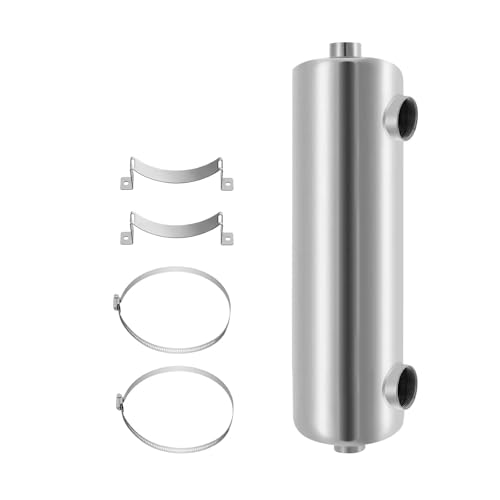
Best for budget-conscious buyers who still want reliable heat transfer. This 304 stainless unit offers a 200 kBtu/hr capability with a 60°C delta, enabling quicker pool heating. It emphasizes steady temperature control across pool or spa circuits. Consideration: 304 stainless is adequate for most environments, but stainless grade selection matters in highly aggressive salts.
Who it’s for: homeowners seeking a cost-effective heating solution. Why chosen: affordable option with dependable heating performance.
AB 155kBtu Stainless Steel Heat Exchanger
Best for smaller pools or spa-focused setups, delivering 155 kBtu/hr. Made from high-grade anti-corrosion 316L stainless steel, it’s designed for chemical-treated environments. A caveat: lower capacity means it might take longer to reach desired temperatures in larger volumes.
Who it’s for: smaller pools, solar integrations, or spa-only heating. Why chosen: compact size with corrosion resistance and a solid warranty.
OtaniReno 200K BTU Stainless Steel Heat Exchanger

Best for saltwater pools or standard installations where durable stainless steel is essential. The 304 stainless steel construction provides corrosion resistance and reliable heat transfer, with a 200 kBTU/h output. A limitation: 304 stainless may be less robust than higher grades in extremely aggressive saltwater setups.
Who it’s for: saltwater pools or hot tubs needing dependable, cost-effective heating. Why chosen: balance of durability and value for daily use.
Buying Guide: Choosing the Right Heat Exchanger for Your Pool
What pool size and flow rate matter?
Match BTU capacity to your pool volume and climate. Larger pools or cooler environments require higher output. Ensure pump flow rates align with the heat exchanger’s recommended operating range to maximize efficiency and avoid pressure issues.
Which material is best for your water chemistry?
316L stainless steel offers strong corrosion resistance for chemically treated and saltwater pools. 304 stainless is adequate for many homes but may require more maintenance in aggressive environments. Titanium variants provide premium corrosion resistance in very harsh water chemistry.
How important are port sizes and installation?
Check port sizing (1″, 1.5″, 2″ FPT) and side-port configurations to fit existing plumbing. Improper fit can lead to leaks or reduced heat transfer efficiency. If unsure, consult a professional installer for piping compatibility.
Installation considerations and maintenance
Look for units with robust welds and seamless seals. Regular inspection of connections, anti-corrosion coatings, and pressure testing helps maintain performance. Consider ease of cleaning and accessibility for annual maintenance.
Compatibility with existing systems
Verify the exchanger works with your heat source (gas boiler, solar, or heat pump) and your spa or pool’s filtration cycle. Some units are better suited for outdoor exposure, while others excel in indoor installations.
Budget and longevity
Higher-grade stainless steel or titanium units typically last longer in challenging water chemistries. While initial costs may be higher, longer service life and reduced maintenance costs can provide better total value over time.
Quick comparisons at a glance
- Best for high-volume pools: AB Pool Heat Exchanger 300 kBtu (316L, large capacity)
- Best balance of cost and performance: VEVOR 210K BTU (316 stainless, solid area)
- Best budget option: DEIGEHJRE 200k (304 stainless)
- Best for smaller spaces: AB 155kBtu (316L, compact)
- Best for saltwater: AB 300K Btu Titanium (titanium construction)
FAQ
- What is a heat exchanger used for in pool heating? Answer: It transfers heat from one water circuit to another, heating pool water without mixing potable water or bringing contaminants into the heater.
- Which material lasts longest in saltwater pools? Answer: Titanium finishes offer superior corrosion resistance in saltwater.
- How do I choose the right BTU for my pool? Answer: Consider pool volume, desired temperature rise, climate, and heater efficiency; larger volumes require higher BTUs.
- Can heat exchangers be used indoors? Answer: Yes, if ventilation and installation guidelines are followed and the system is designed for indoor use.
- Do all heat exchangers require the same port sizes? Answer: No; port sizes vary by model. Check compatibility with your plumbing and fittings.
- Is 316L stainless steel necessary for all installations? Answer: It’s a common choice for corrosion resistance in treated water; 304 may be adequate in milder environments.