When selecting a fan-forced wall heater, look for quick warmth, built‑in thermostats, and compact installation. The top picks below suit different buyers: homeowners needing space-saving heat, small apartment dwellers seeking quiet operation, and property managers stocking reliable, easy-to-install units. The table highlights each model’s fundamentals to compare at a glance.
| Product | Heat Output | Voltage | Best For |
|---|---|---|---|
| Global Industrial Fan Forced Wall Heater with Built-In Thermostat (240/208V) | High efficiency cooling and heating | 240/208V | Spacious rooms and quick warmth |
| CSC151TW Electric Wall Heater Complete Unit With Thermostat | 1500W (5120 BTU) | 120V | Smaller spaces and budget-conscious users |
| Cadet Com-Pak Twin Electric Wall Heater (CSTC402TW) | 4000/3000W (13648/10236 BTU) | 240/208V | Large rooms and high heat demand |
| Cadet Energy Plus Wall Heater (CEC163TW) | Various BTU options 5460/5120/3410 | 240/208/120V | Medium to large rooms with digital control |
| Global Industrial Fan Forced Wall Heater (208/240V) | Integrated thermostat and shading for efficient warmth | 208/240V | Thin profiles in tight spaces |
Global Industrial Wall Heater With Built-In Thermostat

This model combines quick warmth with a built-in thermostat for simple, automatic temperature control. Best for rooms where wall space is limited and a recessed installation is desirable. The unit is designed to heat efficiently while maintaining a comfortable ambient temperature. Consider this option if you need fast heat delivery and a compact footprint in a busy living area.
small-to-medium rooms, apartment dwellers, and spaces needing a discreet heater with an easy thermostat control. Limitations: power requirements may require professional installation and proper electrical wiring to fit your circuit capacity.
CSC151TW Electric Wall Heater With Thermostat

Designed for efficiency, this unit emphasizes low energy consumption alongside strong airflow. It includes a built-in thermostat to automatically regulate temperature, making it suitable for smaller rooms or zones where steady heat is valued without high energy use. It’s a practical choice when you want a quiet, low-wow heater with straightforward operation.
Who it’s best for: budget-minded buyers and spaces up to several hundred square feet. Limitations: 120V operation may cap heat output in very large rooms.
Cadet Com-Pak Twin Electric Wall Heater (CSTC402TW)

This twin heater delivers robust warmth in larger spaces, with 4,000 watts rated at 240V and a built-in thermostat for automatic control. It’s best for open-plan rooms or zones requiring higher heat output. The heavy-duty construction supports consistent operation, especially in rooms where heat demand fluctuates. A simple installation makes it appealing for upgrades in existing can openings.
Who it’s best for: larger living rooms, basements, or studios needing strong steady heat. Limitations: higher wattage requires appropriate electrical wiring and clearances.
CSC202TW Electric Wall Heater With Thermostat

This model emphasizes fast heating with a 240V/2000W system, suitable for spaces up to about 200 sq. ft. It includes an integrated thermostat to maintain a steady set temperature, avoiding energy waste. The design aims for reliable, quick warmth and compact installation, making it a solid option for quick zone heating.
Who it’s best for: small living rooms, offices, and bedrooms where rapid warmth is desired. Limitations: best used below 10,000 feet elevation for optimal performance.
Cadet Energy Plus Wall Heater With Built-in Digital Thermostat
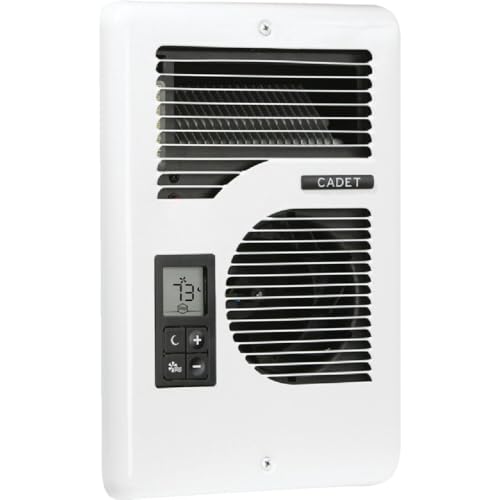
The Energy Plus model integrates a digital thermostat with an easy-to-use interface, allowing precise temperature control. It supports multiple voltages (240/208/120V) for flexible installation in different spaces. It’s ideal for owners who want a modern, programmable feel without manual knob adjustments. It also notes a design approach that helps fit standard wall can openings.
Who it’s best for: users who value digital control and easy updates to existing Cadet installations. Limitations: ensure compatibility with existing wiring and wall can size.
Buying Guide
What size and heat output do I need?
Choose based on room size and insulation. Larger rooms typically require higher wattage or multiple units. For kitchens and bathrooms, space-saving models with fast warm-up can be advantageous. For bedrooms, consider quieter options with thermal protection.
Do I need a built-in thermostat or manual control?
A built-in thermostat helps maintain a steady temperature and save energy by turning the heater on or off automatically. Manual controls can be simpler but may waste energy if left unchecked.
What voltage options matter for installation?
240V units deliver more heat per unit, suitable for larger spaces. 120V models work well for small rooms or upgrades in apartments where higher voltage wiring isn’t available. Some models support multiple voltages for flexibility.
Is installation easy or does it require professional help?
Wall heaters typically install into an existing wall can or electrical box. Recessed options save space but may require drywall work. Verify clearance, electrical wiring, and local code compliance before installation.
What safety features should I expect?
Look for thermal protection, automatic shutoff, and overheat safeguards. A built-in thermostat helps prevent overheating by regulating heat output. Avoid models without guard protections or with visible hot surfaces in high-traffic areas.
Energy efficiency and operating costs
Heaters with thermostats and efficient airflow reduce energy use. Proper room sealing, insulation, and correct sizing contribute significantly to lower running costs over time.
Setting and usage tips
- Install the heater away from curtains, furniture, and water sources.
- Use a thermostat to maintain a comfortable temperature rather than relying on constant full-power modes.
- Combine with good insulation for best results in cooler months.
Summary of selected products
The five reviewed options cover a range of room sizes, wiring setups, and control preferences. For compact spaces with easy installation and a built-in thermostat, Global Industrial models provide efficient warmth in 240/208V configurations. For budget-friendly, 120V operation in smaller rooms, the CSC151TW is a solid pick. For large rooms needing substantial heat, Cadet Com-Pak Twin offers high wattage with a built-in thermostat. The Cadet Energy Plus line adds digital control for precise comfort, while the second Global Industrial option focuses on space-saving wall integration.
Frequently Asked Questions
What is a fan-forced wall heater? A heating unit mounted on or in a wall that uses an electric element and a fan to distribute warm air quickly into a space.
Do these require professional electrical installation? Many do, especially 240V models or recessed installs. Check local codes and consider an electrician if wiring changes are needed.
Can I install these in a bathroom or kitchen? Some models are suitable for damp areas if rated, but verify the product’s intended use and clearances before installing in wet zones.
How do I choose the right wattage? Base the choice on room size, insulation, and desired heat level. Larger rooms often require higher wattage or multiple units.