The best condenser coil cleaner spray depends on whether you want a ready-to-use aerosol, a formula for both evaporator and condenser coils, or a product that can be rinsed or wiped away. Leak Saver Foam Blaster is best for focused, deep-penetrating foam; Simple Green is a practical aerosol choice; and Purafilter suits buyers seeking a commercial-grade cleaner. The options below compare stated uses and application details so you can choose a cleaner that fits your equipment and maintenance routine.
| Product | Best For | Key Difference |
|---|---|---|
| Leak Saver Foam Blaster | Targeted coil cleaning | Focused spray; light rinse for condensers |
| Simple Green Foaming Coil Cleaner | Convenient aerosol use | Self-rinsing on condensate-producing coils |
| PURAFILTER 2000 | Heavy soil removal | Foam can be rinsed or wiped away |
| Arm & Hammer HVAC Coil Cleaner | Odor-conscious maintenance | Biodegradable, self-expanding foam |
| BERIOVE Foaming AC Coil Cleaner | Evaporator and condenser use | No-rinse evaporator use; light condenser rinse |
Leak Saver Foam Blaster

Leak Saver Foam Blaster is best for buyers who want a focused spray intended to reach dirt beneath the coil surface. Its listed formula sprays at higher pressure before expanding into foam, which the manufacturer describes as helping liquify grime and buildup. It is designed for evaporator coils without rinsing and condenser coils with a light water rinse.
Choose this if you need one cleaner for both coil locations and can follow the different rinse directions. The product also states that its foam can deodorize drain pans and leaves a mild fresh scent. One limitation is that condenser cleaning still requires light rinsing; it is not a no-rinse option for every application.
Simple Green Foaming Coil Cleaner

This 20-ounce aerosol, sold as a three-pack, is best for homeowners who prefer a ready-to-use spray rather than mixing concentrate. Simple Green says the professional-strength foam removes dirt, grease, and built-up grime that can impede heat transfer or contribute to clogs. It is self-rinsing on coils that produce condensate.
The product is listed as NSF registered C1 and K5 for use in and around food-processing areas. Choose it if self-rinsing performance on condensate-producing coils is important. The stated self-rinsing feature is specific to those coils, so do not assume every condenser installation will rinse itself; check the product directions for the intended application.
PURAFILTER 2000 Coil Cleaner
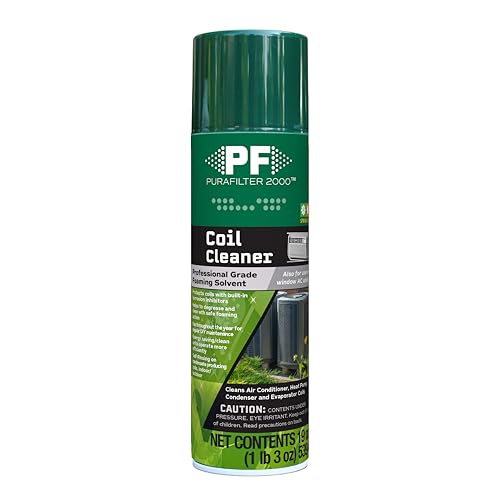
PURAFILTER 2000 is best for buyers who want a foaming cleaner intended for both HVAC condenser and evaporator coils. Its commercial- and professional-grade formula uses foam to help penetrate and lift heavy soils from coil surfaces. The listed features say the cleaner can be rinsed or wiped away.
Choose this if you want flexibility in how you remove residue after application. Its stated use across both coil types makes it a versatile option for routine equipment care. However, the product information does not specify a no-rinse application, so plan to rinse or wipe it away as directed rather than treating it like a self-rinsing formula.
Arm & Hammer HVAC Coil Cleaner
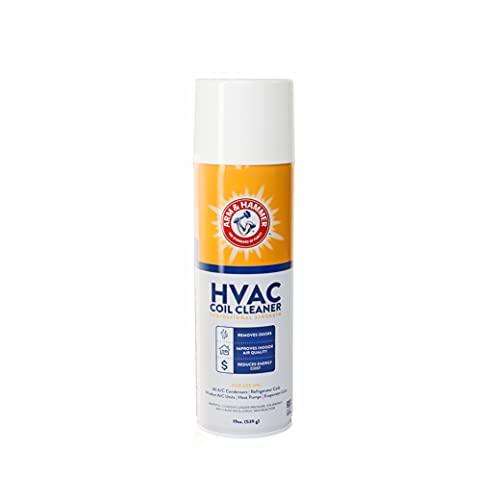
Arm & Hammer’s 19-ounce aerosol is best for buyers who want a foaming cleaner that also targets coil odors. Its self-expanding, biodegradable formula is described as removing dirt and buildup, while the product features highlight odor control. The manufacturer positions it as a cleaner for HVAC and air conditioner coils.
Choose this if odor-related concerns are part of your maintenance needs and you prefer an aerosol format. The listed information does not specify whether the cleaner is self-rinsing or give separate rinse instructions for evaporators and condensers. Check the label before application, particularly when cleaning an outdoor condenser.
BERIOVE Foaming AC Coil Cleaner

BERIOVE is best for buyers looking for one foaming cleaner for evaporator and condenser coils. The listed 57-ounce formula is described as expanding into foam to penetrate coils and loosen dust, grease, grime, and odors. Its instructions distinguish between no-rinse evaporator use and light rinsing for condensers.
Choose this if you want a larger-format product with separate application guidance for indoor and outdoor coils. The listing states compatibility with common residential and small commercial cooling components, but buyers should still confirm that the cleaner suits their equipment and follow its label. Do not treat the listing’s performance claims as a guaranteed result for every system.
Buying Guide
Should a condenser coil cleaner be rinsed?
Follow the product label and distinguish between condenser and evaporator instructions. In this group, Leak Saver and BERIOVE specify light rinsing for condensers. Simple Green’s self-rinsing feature applies to condensate-producing coils, while PURAFILTER says its cleaner can be rinsed or wiped away. Do not assume a cleaner is rinse-free just because it foams.
Is aerosol or concentrated application better?
Aerosol products are convenient for direct application and do not require a separate mixing sprayer. For broader maintenance work, a concentrate and compatible sprayer may offer more control over dilution, but the sprayer is a separate tool and requires following the cleaner’s dilution instructions. The products compared here are ready-to-apply sprays or foams.
What should you check before cleaning a coil?
- Confirm that the cleaner is intended for the coil type you are treating.
- Read the label for rinse, ventilation, and application directions.
- Remove loose debris carefully before applying cleaner when appropriate.
- Protect nearby components and avoid bending delicate coil fins.
- Turn off equipment as directed by the manufacturer or product label.
Frequently Asked Questions
Can the same spray clean evaporator and condenser coils?
Some products are designed for both. Check the label because rinse directions may differ by coil location.
Does foaming cleaner need to be rinsed off?
It depends on the formula and application. Some products are self-rinsing on condensate-producing coils, while others call for rinsing or wiping.
Can I use a coil cleaner on a dirty outdoor condenser?
Use a product labeled for condenser coils and follow its instructions, including any light-rinse requirement.
How do I choose between these sprays?
Compare the listed coil uses, application format, soil-removal claims, and rinse requirements. Choose a product whose directions match your equipment and cleaning setup.