Answering the common buyer question: which condensate drain line pump best fits your HVAC setup? This guide highlights five practical options, detailing who they’re best for, how they work, and where to use them. Choose this if you need a simple hand-operated solution, or opt for a compact automatic pump for limited space. This overview helps homeowners, renters, and light commercial users decide which pump aligns with their drainage needs and maintenance habits.
Summary of selected products:
| Product | Type | Best for | Key Benefit |
|---|---|---|---|
| RectorSeal Mighty Pump 97795 | Hand Operated | Small spaces, manual maintenance | Heavy-duty PVC construction for slime and dirt clearance |
| Little Giant VCMA-15ULST | Automatic Condensate Pump | Boilers, furnaces, air conditioners with automatic overflow detection | Compact footprint with automatic operation |
| Aquastrong 85 GPH HVAC Condensate Pump | Automatic Condensate Pump | Multi-unit setups needing safe auto shutoff | High performance with safety switch and low noise |
| Little Giant VCMA-20ULST | Automatic Condensate Pump | Spacious or higher-capacity drainage needs | Higher flow with overflow detection |
| Aquastrong 70GPH HVAC Condensate Pump | Automatic Condensate Pump | Budget-friendly, versatile installs | Good flow and parallel-install capability |
RectorSeal Mighty Pump 97795

- Best for: Small to medium condensate lines where manual operation is acceptable.
- Why selected: Heavy-duty PVC construction provides enough pressure to clear slime, mold, and dirt from primary and secondary drain lines without electricity.
- Caution: Manual operation may require more frequent attention than automatic pumps in busy systems.
Features in context: A hand-operated, high-volume, low-pressure drain clog remover designed for quick maintenance and cleanup. Lightweight yet durable PVC ensures longevity in HVAC condensate applications. Multiple uses include draining standing water from overflow pans and clearing condensate lines when power isn’t available.
Little Giant VCMA-15ULST

- Best for: Systems needing automatic condensate removal with a compact footprint.
- Why selected: 1/50 HP motor and vertical switch reduce space while reliably removing condensate from boilers, furnaces, and AC units.
- Caution: May require compatible tubing and routing in tight spaces; ensure vertical mounting on a flat surface.
Features reference: Built with ABS tank and stainless steel shaft, the unit is thermo-protected and designed to handle up to 140°F water. The included 20-foot tubing aids flexible installation in many HVAC layouts.
Aquastrong Mini Split Condensate Pump (9.6 GPH)
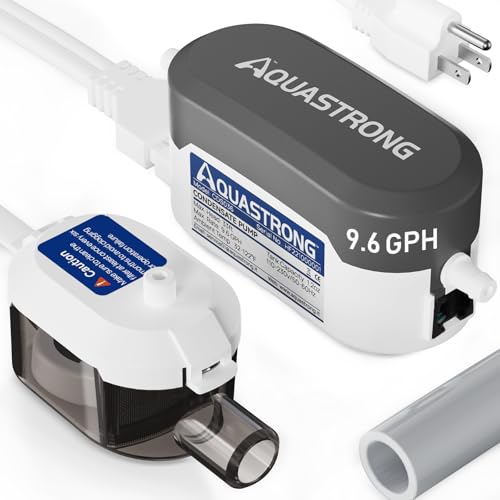
- Best for: Mini split systems or units requiring a quiet, compact pump with auto operation.
- Why selected: High efficiency motor, automatic safety switch, and 33 ft lift support longer drainage without frequent pump cycling.
- Caution: Requires careful maintenance of reservoir and filter to prevent clogging over time.
Reference: 9.6 GPH max flow, 33 ft max lift, 115V/230V compatibility. The float switch triggers auto operation, and a removable reservoir aids upkeep in compact installations.
Little Giant VCMA-20ULST

- Best for: Higher-capacity drainage needs where a larger pump is beneficial.
- Why selected: 1/30 HP motor, 80 GPH capacity, and overflow detection switch for reliable auto operation.
- Caution: Ensure proper vertical mounting and adequate tubing connections for peak performance.
Features noted: Waterproof-safe plastics, a robust motor, and a 20-foot tubing option support larger HVAC configurations seeking dependable condensate management without constant supervision.
Aquastrong 70GPH HVAC Condensate Pump

- Best for: Budget-conscious projects needing automatic operation and parallel connection capability.
- Why selected: 70 GPH flow with five 1″ inlet ports for multi-device setups and a dependable auto shut-off safety switch.
- Caution: Check vertical mounting and ensure outlet tubing matches 2/5″ O.D. specifications to prevent leaks.
Reference: 2/5″ O.D. outlet with check valve, removable reservoir, and thermoplastic construction suitable for abrasion and corrosion resistance. The five inlet ports enable parallel installations for multiple condensate sources.
Buying Guide: Condensate Pump Essentials
- What capacity do you need? Compare GPH ratings to your typical condensate output. Higher GPH suits larger or multiple units; lower GPH fits compact spaces.
- Automatic vs. manual: Choose automatic pumps for hands-off operation and overflow protection; opt for manual if power availability is sporadic or if you prefer direct control.
- Safety features: Look for built-in float switches, thermal protection, and automatic shut-off to prevent overflow and water damage.
- Installation space: Consider footprint, vertical mounting requirements, and tubing compatibility (inlet/outlet sizes and check valves).
- Durability and materials: PVC, ABS, and stainless steel components affect longevity in humid environments and with condensate chemistry.
- Maintenance needs: Removable reservoirs and accessible filters simplify cleaning to prevent clogs and odors.
Frequently Asked Questions
- What is a condensate drain line pump used for?
It removes condensate produced by HVAC equipment, helping prevent overflow and water damage.
- Should I choose an automatic or manual pump?
Automatic pumps reduce maintenance and risk of overflow; manual pumps work where power delivery is unreliable or not required.
- What inlet/outlet sizes should I expect?
Common inlets are 1″ or 3/4″ and outlets range from 1/2″ to 2/5″ O.D. Check compatibility with tubing and fittings.
- Can condensate pumps be used for multiple devices?
Yes, some models offer multiple inlet ports, enabling parallel connections for several condensate sources.
- How do safety switches prevent overflow?
Sensors trigger the pump to stop or switch on alarms when water levels rise, reducing spill risk.
- Are higher GPH pumps always better?
Not always; match the pump capacity to your drainage load and system layout for efficient operation.