The best bathroom fan for a side vent is a model designed to exhaust through an exterior wall, or a ceiling fan that can connect to a duct routed to a side wall. The Quini is the clearest fit for direct through-wall installation, while the Broan-NuTone 682 is a compact option for wall or ceiling placement. The LBiWin, Orsong, and Amico models offer other airflow and duct-size choices, but check their installation requirements before buying: a product described as a wall fan is not automatically suitable for every side-vent opening.
| Product | Best For | Key Detail |
|---|---|---|
| Quini 512M | Direct through-wall exhaust | Adjustable 6.2-inch duct |
| Broan-NuTone 682 | Compact wall or ceiling placement | Charcoal filter; 2 x 4-inch minimum construction space |
| LBiWin 8-Inch Round Fan | Quiet, higher-airflow ventilation | 110 CFM; 3-inch duct; 7-inch rough opening |
| Orsong 10-Inch Panel Fan | Larger bathrooms | 110 CFM; 4-inch duct |
| Amico 80 CFM Fan | Quieter ceiling installation | 1.0 sones; 4-inch duct |
Quini 512M Through-Wall Exhaust Fan

Best for: Buyers seeking a fan specifically described for through-wall bathroom ventilation. Its adjustable aluminum-foil duct measures 6.2 inches in diameter and extends from 2 to 15 inches, with a stated fit for walls 6 to 19 inches thick.
The listed airflow is 80 CFM, and the fan is also described for kitchen ventilation. The adjustable duct makes it a more direct match for a side-wall exhaust route than a standard ceiling-only unit.
Check before buying: The product listing cautions buyers to verify installation dimensions and wall thickness. Its 4.0-sone rating is louder than the 1.0-sone options in this guide.
Broan-NuTone 682 Wall Or Ceiling Fan

Best for: Buyers who need a compact fan that can be installed between ceiling joists or wall studs. The manufacturer describes it as a versatile ventilation fan for humidity, tobacco smoke, and cooking odors.
Its charcoal filter circulates air through the enclosed space, and the listing gives a minimum construction space of 2 by 4 inches. Torsion springs hold the grille in place without tools, according to the product details.
Check before buying: The listed features do not state a CFM rating, duct diameter, or sound level. Confirm that its air-circulation design and installation method suit the intended exterior side-vent route; do not assume it connects to a duct based on its wall-installation description.
LBiWin 110 CFM Round Fan

Best for: Buyers prioritizing higher airflow and quiet operation in a bathroom, RV, kitchen, or mobile home. The fan is listed at 110 CFM and 28 dB, with a white round finish.
Although the product name includes “through wall,” the listed installation details specify a 3-inch duct and a 7-inch-diameter rough opening. That makes it important to compare both measurements with the planned side-vent installation, rather than relying on the product name alone.
Check before buying: Measure the existing duct and opening carefully. The listed 3-inch duct may not match a larger wall sleeve or existing vent without appropriate duct planning.
Orsong 110 CFM Ceiling Panel Fan
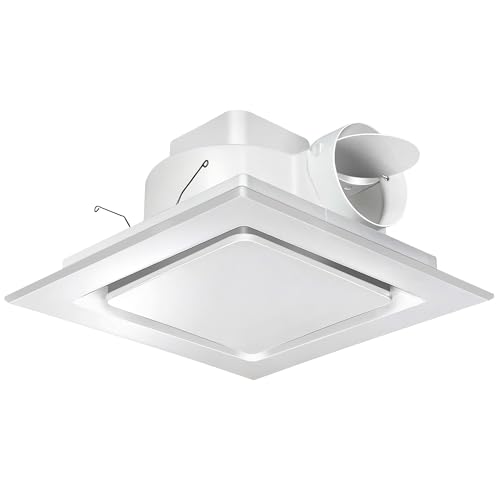
Best for: Buyers who need 110 CFM for a bathroom up to 120 square feet and can route a duct from the ceiling fan to a side-wall termination. The listed sound rating is 1.0 sone, and the duct diameter is 4 inches.
This is a ceiling-mounted fan, not a direct-through-wall model. It can suit a side-vent project when the installation plan includes compatible ductwork running from the ceiling housing to the exterior wall.
Check before buying: The name specifies an 8-by-8-inch mount, but the supplied details do not give a ceiling cutout measurement. Verify the required opening and route before selecting it.
Amico 80 CFM Quiet Bathroom Fan

Best for: Buyers who want a quiet ceiling-mounted fan for a bathroom up to 80 square feet and can connect it to a side-wall duct route. It provides 80 CFM, operates at 1.0 sone, and uses a 4-inch duct.
The listed housing measures 7.5 by 7.2 by 4 inches, with a recommended ceiling cutout of 7.6 by 7.3 inches and a grille measuring 9.4 by 8.6 inches. Those measurements help buyers compare the unit with an existing ceiling opening.
Check before buying: This is a ceiling-mounted model, not a direct wall fan. Confirm the duct path, clearance, and exterior termination separately.
Buying Guide: How To Choose A Bathroom Fan For Side Venting
Do you need a direct wall fan or a ceiling fan with ductwork?
A direct through-wall fan exhausts through an exterior wall at the fan location. A ceiling fan can also vent through a side wall, but only when ductwork connects its outlet to the wall termination. Choose based on the physical route, not just wording such as “wall fan” or “side vent.” The Quini is explicitly described as a through-wall fan; the Amico and Orsong are ceiling-mounted models.
How much airflow should you look for?
Compare the fan’s CFM rating with the room size and the manufacturer’s stated coverage. The products here range from 80 to 110 CFM where a rating is provided. The Amico is listed for bathrooms up to 80 square feet; the Orsong is listed for up to 120 square feet. The Broan-NuTone 682 details provided here do not include a CFM figure, so check its product specifications before comparing airflow.
Which measurements matter most?
- Measure the wall thickness, rough opening, and duct diameter before ordering.
- For ceiling-mounted models, check the housing size, cutout, and clearance above the ceiling.
- Confirm that the duct route can reach the exterior vent without conflicting with the structure.
- Compare sound ratings when quiet operation is important; lower sone figures indicate quieter stated operation.
What should you know about duct routing?
A fan’s duct diameter must work with the planned duct and exterior termination. These products list duct sizes from 3 to 6.2 inches, so they are not interchangeable by default. Avoid choosing a unit solely because its airflow seems adequate; a mismatched opening or difficult route can complicate installation.
Frequently Asked Questions
What does “bathroom fan side vent” mean?
It usually means a bathroom fan exhausts outdoors through a side wall, either directly through the wall or through ductwork from a ceiling-mounted fan.
Can a ceiling fan vent through a side wall?
Yes, if the fan connects to a suitable duct route that terminates outdoors through the wall. Check duct size and installation instructions for the specific model.
Which listed fan is specifically made for through-wall installation?
The Quini 512M is described as a through-wall exhaust fan and includes an adjustable duct. Verify its dimensions and wall-thickness fit before purchase.
Is a higher CFM rating always better?
No. Choose airflow appropriate for the room and installation. Also check noise level, duct compatibility, and the manufacturer’s stated coverage.
Should I measure the existing vent opening?
Yes. Measure the opening, duct diameter, and wall or ceiling clearance before selecting a replacement fan. Matching these details can help avoid installation-fit problems.