Answering the buyer’s intent: Find portable and window air conditioners that fit your space, budget, and energy goals. This guide highlights five well-rounded options and explains who each is best for, plus practical trade-offs. Ideal for small bedrooms, living rooms, or multi-room setups, these picks balance cooling power, noise, and ease of installation.
| Product | Type | Room Size | Best For |
|---|---|---|---|
| Garvee 8,000 BTU Portable | Portable | Up to 350 sq ft | Small to medium living spaces; flexibility to move between rooms |
| GE 5,000 BTU Window AC | Window | Up to 150 sq ft | Bedrooms or compact spaces; simple, mechanical controls |
| AGTANA 14,000 BTU Portable | Portable | Up to 700 sq ft | Large rooms or open-plan areas; quiet operation at night |
| QZMDSM 16,000 BTU Portable | Portable | Up to 750 sq ft | Large rooms; smart features and energy efficiency |
| Shinco 12,000 BTU Portable | Portable | Up to 450 sq ft | Mid-size rooms; 3-in-1 function for year-round use |
Garvee 3-in-1 Portable Air Conditioner

Best for small to mid-size rooms needing flexible cooling with dehumidification. 8,000 BTU capacity covers up to 350 sq ft. Features include cooling, dehumidifier, and fan modes, plus a sleep timer (1–24 hours) and a remote. Quiet operation under 50 dB suits bedrooms or study spaces. The included window kit supports installation in windows from 15.47 to 47.24 inches. Caution: Some smaller windows may require trimming for a proper seal.
Who it’s for: apartment dwellers or rooms that require portable unit versatility without wiring. Why selected: 3-in-1 function simplifies comfort in variable summer conditions.
GE Window Air Conditioner 5,000 BTU

Best for compact spaces where installation in a window is feasible. It cools up to 150 sq ft with two cooling modes and two fan speeds. Mechanical controls provide straightforward operation without digital clutter. Auto restart after outages helps maintain comfort. Caution: Limited cooling range makes it better for smaller rooms rather than larger living areas.
Who it’s for: renters or spaces with tight footprints. Why selected: simple, reliable control and quiet operation compared with larger, more complex models.
AGTANA 14,000 BTU Portable Air Conditioner
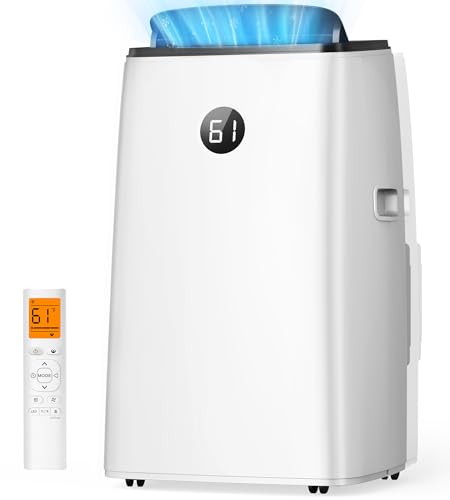
Best for large rooms up to 700 sq ft that require robust cooling and self-evaporating efficiency. This unit includes auto-swing, a continuous drainage option, and a safety auto-stop feature for leak prevention. It operates at a quiet level in sleep mode and offers a 24-hour timer for scheduling. Caution: Higher BTU means greater size and potential energy use; ensure space supports venting requirements.
Who it’s for: open-plan living areas or basements needing strong, even cooling. Why selected: superior airflow and self-evaporation reduce maintenance in humid environments.
QZMDSM 16,000 BTU Portable, 6-in-1

Best for large rooms up to 750 sq ft with smart features and energy efficiency. It includes WiFi control, remote, LED panel, and multiple modes (Cooling, Fan, Dehumidifier, Auto, Sleep, Energy-Saving). The unit emphasizes quiet operation (about 45 dB) in Sleep Mode and a 24-hour timer. Caution: WiFi connectivity requires a compatible network for full smart features.
Who it’s for: tech-friendly homes seeking remote control and energy-conscious cooling in larger spaces. Why selected: high cooling capacity paired with smart features and low-noise performance.
VACOOR 14,000 BTU Portable AC

Best for large rooms up to 700 sq ft that need rapid cooling and an upward air vent design. Features include 14,000 BTU cooling, an energy-efficient CEER rating, and a 3-in-1 function (cooling, fan, dehumidifier). The unit is designed for strong airflow and quick room chilling. Caution: Unit height and venting setup require adequate ceiling clearance in some spaces.
Who it’s for: home offices or living areas where fast, whole-room cooling is essential. Why selected: strong cooling power with energy-conscious performance and multiple modes.
Shinco 12,000 BTU Portable Air Conditioner

Best for rooms up to 450 sq ft with a 3-in-1 function (cool, dry, fan) and a window kit for quick installation. The unit includes a remote and a 24-hour timer. It emphasizes strong cooling with a compact footprint. Caution: Header BTU range is dependent on environmental conditions; actual performance varies with humidity and room layout.
Who it’s for: users who want a versatile unit with straightforward install and versatile season-round use. Why selected: balanced power, dehumidification, and ease of setup.
Buying Guide: Key Purchase Considerations
- Room size and BTU: Match the unit’s BTU rating to your room size for effective cooling without unnecessary energy use.
- Portability vs. window installation: Portable units offer flexibility; window units typically provide the most efficient cooling per BTU.
- Energy efficiency: Look for CEER or ENERGY STAR ratings and consider inverter-based models when available.
- Noise levels: Sleep-friendly units typically operate under 50–45 dB; consider bedroom use when choosing
- Drainage and moisture handling: Self-evaporating systems reduce maintenance; manual drainage is sometimes required in high humidity.
- Smart features: WiFi/app control adds convenience but may increase cost; ensure compatibility with your devices.
- Installation ease: Exposed hoses, window kits, and seals affect efficiency and air leakage; ensure window compatibility.
FAQ
- What size portable AC do I need for a 350 sq ft room? – A unit around 8,000 BTU is typically suitable, but factors like ceiling height and climate affect needs.
- Can I install a window AC by myself? – Yes, most window units come with installation kits and do not require tools beyond basic assembly, though you should follow the manufacturer’s instructions.
- Which is quieter, portable or window units? – Generally, well-designed window units can be quieter per BTU, but modern portable units can also achieve low noise levels.
- Do I need to vent portable AC units outside? – Yes, portable units use a vent hose to exhaust hot air outside the room.
- Are smart AC units worth it for energy savings? – Smart controls can optimize cooling schedules and remote operation, potentially saving energy over time.
- Is self-evaporating technology important? – It reduces water drainage in typical use, but some environments may still require occasional drainage.