Direct answer to buyer intent: if you’re protecting floors and carpets from condensate, choose durable, leak-resistant drain pans or mats designed for your unit type. This guide highlights five top options that balance durability, size, and ease of installation for a range of portable and outdoor setups. Best for homeowners seeking added floor protection, contractors needing quick replacements, and renters wanting simple, non-permanent solutions.
Summary at a glance: the following five products cover common scenarios—from indoor condensate pans to outdoor unit mats and silicone drip trays. Use this table to compare sizes, materials, and compatibility to identify the best fit for your air conditioner setup.
- DiversiTech (6-2424L) A/C Secondary Condensate Drain Pan — Plastic tray, 24 x 24, seamless and durable
- Sptnabv Portable AC Drip Pan — 20” x 16”, raised edge, carpet-floor protection
- Plusluck Portable Air Conditioner Silicone Mat — 20” x 20”, raised edge, versatile appliance mat
- DiversiTech (6-2748L) A/C Secondary Plastic Condensate Drain Pan — 27″ x 48″, reinforced ABS
- Mikikit Air Conditioner Drip Pan — Stainless steel exterior unit tray with drain hose
DiversiTech 6-2424L A/C Secondary Drain Pan

Material and construction: ABS plastic with rolled edges and a ribbed bottom for strength. The design is seamless to reduce leakage risk over long-term use. It protects indoor spaces from condensate overflow and potential damage from HVAC drain pans.
- Best for: indoor evaporator coil setups where a compact, leak-resistant drip tray is needed.
- Why selected: durable, seamless, and designed to minimize corrosion or rust with continuous use.
- Caution: ensure the 24 x 24 size fits your equipment tray or cabinet space.
Sptnabv Portable AC Drip Pan
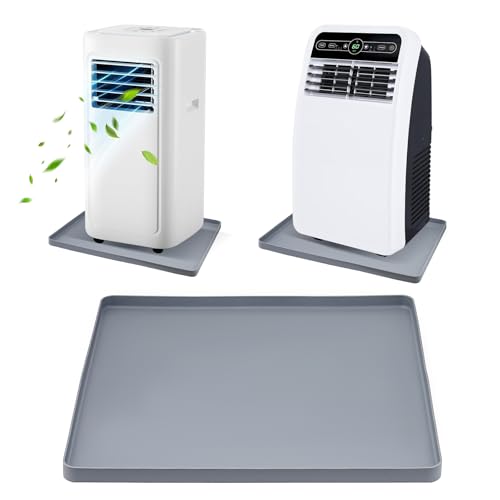
Features: 16″ x 20″ tray with 0.6″ raised edge to contain water and prevent spills. Designed to protect floors and carpets from condensation leakage when under portable AC units.
- Best for: under portable AC units up to mid-range BTU ratings where spill containment matters.
- Why selected: solid raised-edge containment helps reduce floor damage in high moisture areas.
- Caution: measure your portable unit to ensure fitment within the 16″ x 20″ footprint.
Plusluck Portable Air Conditioner Silicone Mat

Material and design: premium silicone with 0.7-inch raised edges to contain condensation. Waterproof guard protects floors and appliances from leaks, drips, and spills.
- Best for: versatile use under portable ACs, mini fridges, and other moisture-prone appliances.
- Why selected: silicone offers durability, flexibility, and easy cleaning compared with rigid trays.
- Caution: silicone mats can be more pliable than hard pans; ensure compatible thickness with your setup.
DiversiTech 6-2748L A/C Secondary Plastic Pan

Overview: Plastic drain pan with rolled edges, sealed seams, and a ribbed bottom for structural integrity. Vacuum-formed ABS construction aims to resist leaks and rust over extended use.
- Best for: larger condensate collection needs in mid-to-large HVAC installations.
- Why selected: the larger 27″ x 48″ footprint supports broader evaporator configurations.
- Caution: check compatibility with your outdoor or indoor coil tray to avoid fit issues.
Mikikit Stainless Steel Drain Pan

Construction: stainless steel exterior unit water tray with a 6.5-foot drain hose and clamp. Designed to withstand outdoor conditions and resist corrosion while keeping condensate contained.
- Best for: outdoor or exposed installations where durability against weather is important.
- Why selected: stainless steel offers long-term wear resistance and easier cleaning in harsh environments.
- Caution: heavier than plastic pans; install with proper support to prevent handling issues.
Buying Guide
What to consider before buying an air conditioner drain pan
- Size and fit: Measure your evaporator tray or under-unit space to ensure the pan fits without obstructing airflow or access panels.
- Material choice: Plastic pans are lightweight and affordable; stainless steel offers durability for outdoor use; silicone mats provide flexible, easy-to-clean protection.
- Containment edge design: Raised edges help prevent spills onto floors; consider edge height relative to typical condensate volumes.
- Installation: Some products include hoses, clamps, or mounting holes—evaluate whether you need external drainage or simple, passive protection.
- Installation environment: Indoor condensate pans reduce moisture risk in living spaces; outdoor or external units require weather-resistant materials.
- Maintenance: Look for seamless designs and rust-resistant finishes to minimize cleaning and maintenance needs.
FAQ
- What is the main purpose of an air conditioner drain pan?
To collect condensate, prevent leaks, and protect floors and surfaces from moisture damage. - Which material is best for indoor use?
Plastic drain pans with seamless designs are common for indoor use due to affordability and corrosion resistance. - Are raised-edge mats better than flat pans?
Yes, raised edges help contain larger spills and condensate volumes, reducing runoff. - Can I use a silicone mat under any air conditioner?
Versatility varies; silicone mats work well under portable units and other appliances but check size compatibility. - Do I need professional installation for drain pans?
Most pans are DIY-friendly, but outdoor setups with hoses or complex drainage may require basic tools. - How do I choose between a pan and a mat?
Choose a pan for permanent or semi-permanent installations; choose a silicone mat for flexible protection and easy cleaning.