Answering the question, these 24V DC air conditioners are designed for vehicles and off-grid setups where standard AC power isn’t available. They’re best for owners of RVs, campers, trucks, and vans who need reliable cooling on battery Power or low-idle operation. This guide highlights five common 24V DC models, comparing cooling power, energy use, and installation considerations to help you pick the right unit for your needs.
| Product | Why It Might Fit You | Key Specs |
|---|---|---|
| UAHKPA 24V RV Air Conditioner | Ideal for long campground stays and heavy-duty off-road rigs | 13,000 BTU, 900W, R134a |
| SleYuYir 24V RV Air Conditioner | Good balance of cooling and heating in RVs | 10,000 BTU cooling, 3,500 BTU heating, 24V |
| Bteirac 24V Truck Air Conditioner | Best for trucks, semi-trucks, and work vehicles | 8,000 BTU, 24V, 350 CFM |
| Yunxingtianji 24V Mini Split RV AC | Compact option with efficient heat dissipation | 24V, high COP, 2850 RPM compressor |
| Cybertake S2 Pro Portable Camping AC | Flexible power options (DC, AC, portable power) | 5100 BTU cooling / 6100 BTU heating, 48V DC |
UAHKPA 24V RV Air Conditioner

Best for heavy-duty camping vehicles and RVs that rely on battery power. Features indicate a sturdy hard-shell exterior with good heat dissipation from vented side and back panels, and a cooling capacity of 2800W/13,000 BTU. This unit is designed to run on 24V DC with a starting current around 45A and a nominal power draw near 900W, making it a strong option for off-grid cooling when battery capacity supports it. Caution: performance depends on battery readiness; ensure adequate capacity for extended runs.
Who it’s best for: buyers needing robust cooling for larger RVs or trailers where engine idling is undesirable. Why selected: high cooling output in a 24V package, solid enclosure, and heat-dissipating shell design help maintain efficiency in mobile environments.
SleYuYir 24V RV Air Conditioner

Best for RV owners who want a balance of cooling and heating capability in a single 24V system. This model lists 10,000 BTU of cooling and 3,500 BTU of heating, suitable for medium-sized RVs and trailers. It uses a similar 24V architecture with a 45A starting current and 900W-ish running power, aligning with other 24V offerings. Limitation: heating capability depends on ambient conditions and proper insulation; verify whether your space needs sustained heating in shoulder seasons.
Who it’s best for: RVers seeking reliable year-round comfort without engine idling. Why selected: strong heating and cooling mix for mid-sized spaces, plus a dedicated 24V DC design for off-grid use.
Bteirac 24V Truck Air Conditioner

Best for heavy-duty vehicles and work trucks that require durable cooling with relatively high airflow. This unit delivers up to 8000 BTU with up to 350 CFM and emphasizes compatibility with 24V electrical systems and sizable battery or inverter support. It’s ideal for vehicles where space is at a premium but robust performance matters. Caution: energy consumption can be substantial; ensure the electrical system and generator or inverter can meet peak demand.
Who it’s best for: drivers of semi-trucks, vans, or campers needing a robust, fast-cooling solution. Why selected: strong cooling for larger cabins, rugged construction, and broad vehicle compatibility in a 24V format.
Yunxingtianji DC 24V Mini Split RV Air Conditioner

Best for compact RVs and camper vans that require efficient heat dissipation and energy-conscious cooling. This 24V mini-split design highlights a thickened aluminum condenser and intelligent control features, adapting operating frequency with temperature to save energy. It’s suitable when space is constrained but you still need steady climate control in a 24V system. Limitation: may have a smaller footprint and slightly lower cooling output than full-size units, depending on installation.
Who it’s best for: travelers with smaller rigs or tight mounting spaces who still want a true 24V system. Why selected: efficient heat dissipation, energy-aware operation, and compact form factor.
Cybertake S2 Pro Portable Camping Air Conditioner
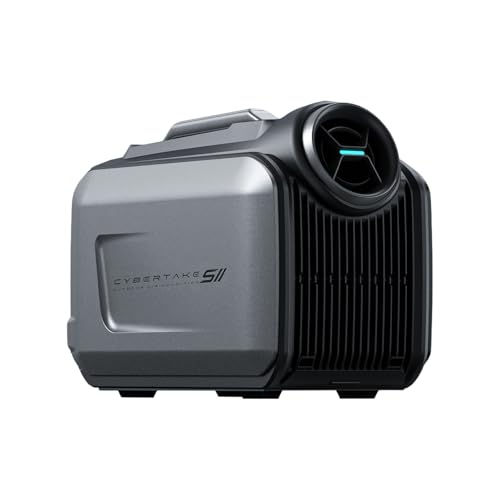
Best for flexible power setups, including 48V DC, 12V/24V vehicle, wall outlets, or portable power stations. The Cybertake S2 Pro provides 5100 BTU of cooling and 6100 BTU of heating, offering true all-season capability without relying on a single power source. This makes it a good choice for tent, RV, or cabin use with adaptable power strategy. Caution: remote control and boost converter may be needed for full feature use, which impacts setup and cost.
Who it’s best for: off-grid campers and mixed-use spaces that require multiple power sources. Why selected: the broad power compatibility enhances deployment in diverse scenarios and reduces dependence on a single power source.
Buying Guide: Key Considerations For 24V DC RV And Vehicle Air Conditioners
- Power source compatibility: Confirm your battery bank, inverter, or generator can support peak current, especially during startup (often 45–55A for these units).
- Cooling vs. heating needs: If you expect both hot days and cool nights, prioritize units with both cooling and heating modes, and check heating efficiency in your typical climate.
- Vehicle compatibility and space: Consider whether you need a roof-mounted unit, underbody outdoor unit, or a compact mini-split design to fit your vehicle’s dimensions.
- Energy efficiency: Look for intelligent controls, variable-frequency drives, and evaporator design that adjusts compressor output with ambient temperature to save battery life.
- Durability and heat dissipation: Units with robust housings and well-ventilated exteriors reduce heat buildup and increase longevity during rugged travel.
- Installation complexity: Some setups require professional installation, particularly for underbody or roof-mount configurations; others may be plug-and-play with vehicle power connectors.
- During off-grid use: Plan for charge times, cooling duration, and potential need for an auxiliary power source for extended camping trips.
- Maintenance considerations: Check refrigerant type, access to service parts, and ease of cleaning, especially in dusty or sandy environments.
Frequently Asked Questions
- What is the typical power draw for 24V DC RV air conditioners?
– Most units list startup currents around 45A and running powers near 900W, though exact figures depend on the model and ambient conditions. - Can these units run while the vehicle is parked?
– Yes, several models are designed for electric parking use, reducing engine idling and fuel consumption. - Is heating available with all 24V models?
– Not all units include heating; some offer heating as a secondary feature or in a separate model. Check BTU heating specs for each unit. - Do these systems require professional installation?
– It varies by model and mounting method. Roof- vs underbody-mounted units often require installation expertise, while some portable or compact units may be easier to set up. - Which 24V DC air conditioner is best for a small camper van?
– A compact 24V mini-split or a smaller-capacity 24V unit with efficient heat exchange is typically best for small spaces to balance cooling power and energy use. - Can I mix 24V DC and 12V DC components in the same vehicle system?
– It’s possible but requires careful electrical design to avoid voltage mismatches and ensure safe operation. Consult a professional for multi-voltage setups.