If you’re shopping for a 1 horsepower pool pump, you’re likely seeking reliable flow, energy efficiency, and long-term durability for above-ground or inground pools. The top picks below are chosen for steady performance, ease of installation, and value. This guide helps you compare models that fit 1 HP needs, with notes on best uses and potential limitations.
| Product | Best For | Key Benefit |
|---|---|---|
| Doheny’s 1 HP Above Ground Pump | Above-ground pools | Durable stainless steel shaft; low-noise operation |
| VEVOR 1HP Above Ground Pump | Budget-conscious above-ground setups | Copper motor; integrated thermal protection |
| 1.0 HP In/Above Ground Pump (LAPPPLSP) | Versatile above or in-ground with basket | High output; see-through lid for quick service |
| VEVOR 1.5 HP Pump | Higher flow needs | High max flow with clear basket lid |
| Doheny’s Inground Pro Pump | In-ground systems | Self-priming; robust stainless steel shaft |
Doheny’s 1 HP Above Ground Pool Pump

Best for: above-ground pool setups where durability and low noise are priorities. The pump uses a stainless steel motor shaft and reinforced thermoplastic body to enhance longevity. It is designed for 115V operation with 75 GPM flow, aiming to balance performance with efficiency. This model is well-suited for seasonal pools or smaller installations that need dependable circulation without overkill.
Why selected: Its combination of corrosion-resistant components and a reinforced construction supports long service life in outdoor environments. The low-noise operation helps maintain a tranquil pool area, especially in residential yards. It is overall a strong value choice for above-ground pools requiring a straightforward, dependable pump.
Caution: Check the threaded connections (0.9 THP) to ensure compatible fittings with your existing plumbing. Some setups may require adapters for optimal fitment.
VEVOR Above Ground Pool Pump, 1HP

Best for: above-ground pools where reliability and thermal protection are valued. The 1 HP copper motor and corrosion-resistant PP shell support stable operation, even with treated water, while a clear filtration basket housing keeps maintenance straightforward.
Why selected: The 80 GPM max flow and 36 ft head lift offer solid circulation for standard above-ground pools. Built-in thermal protection helps prevent overheating during longer run times. The design emphasizes durability and leak resistance in outdoor environments.
Caution: The pump is designed for above-ground pools; for inground systems, verify compatibility with your plumbing layout and head pressure expectations.
1.0 HP In/Above Ground Pool Pump

Best for: versatile installs that may shift between above-ground and inground configurations. The 1.0 HP pump yields up to 5580 GPH (87 GPM) with a transparent lid to inspect the basket, and IP55-rated waterproofing adds a layer of reliability for outdoor use.
Why selected: High maximum flow makes it suitable for larger decks or pools where you want robust cleaning cycles. The see-through lid and cam-lock lid offer convenient, tool-free inspection and maintenance.
Caution: Wire or electrical work should follow local codes; confirm that a 110V-120V supply and outdoor-rated components are in place before installation.
VEVOR Swimming Pool Pump, 1.5 HP
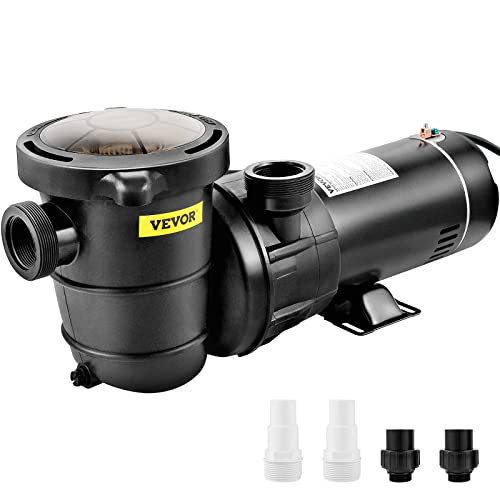
Best for: pools needing higher flow than a standard 1 HP unit, with a focus on powerful circulation and a large filter basket for reduced maintenance frequency. This option provides a 333 L/min (88 GPM) flow and a 43 ft head lift, which helps with faster turnover in larger or dirtier pools.
Why selected: A pure copper motor with a stainless-steel shell supports durability and efficient operation. The detachable, oversized filter basket minimizes downtime between cleanings, while the transparent lid helps identify when cleaning is needed.
Caution: This unit may draw more electricity than lighter-duty models; ensure your circuit can handle the load and that use aligns with local energy guidelines. Not ideal for very small pools with simple filtration needs.
Doheny’s Inground Pro Pump

Best for: inground pool systems requiring a self-priming, heavy-duty, low-noise pump with broad compatibility. This model uses a stainless steel shaft and reinforced thermoplastic body to withstand varying seasonal conditions.
Why selected: Its self-priming feature and large basket design extend runtimes between cleanings. The 3.5″ external and 2″ internal connections offer flexibility when integrating with diverse pool plumbing configurations. It is CSA and ETL certified for added assurance.
Caution: In some setups, installation may require unions or fittings to match your specific plumbing dimensions. Verify compatibility before purchasing.
Buying Guide: How to Choose a 1 HP Pool Pump
What to prioritize
Flow rate (GPM) and head height determine how effectively your pool water circulates. A higher GPM is beneficial for larger pools or faster turnover, while head height determines lifting capability across stairs or elevations.
Tube and seal compatibility
Check inlet/outlet sizes (commonly 1.5″ or 2″ NPT) and connection types to ensure fit with your existing plumbing. Look for pumps with corrosion-resistant bodies and stainless steel shafts for longevity in outdoor environments.
Electrical considerations
Most 1 HP pumps run on 115V or 230V single-phase power. Ensure your electrical circuit can handle the continuous load, and verify outdoor-rated components and weatherproof enclosures. Consider pumps with thermal protection for added safety.
Maintenance and accessibility
Detachable filter baskets and see-through lids simplify maintenance. A larger basket reduces frequency of cleaning, while clear lids help you spot when cleaning is needed without disassembly.
Cost vs. value
Higher upfront cost can be offset by longer service life and lower replacement frequency. Balance material quality (copper windings, stainless components) with expected pool size and seasonal use.
Recommended use cases
- Above-ground pools: prioritize models with corrosion resistance and easy service access.
- In-ground pools: choose self-priming units with robust plumbing compatibility and longer service life.
- Large or high-demand pools: consider 1.5 HP options for greater flow and faster turnover.
FAQ
- What does 1 HP mean for pool pumps? It indicates the motor’s horsepower, reflecting potential power and flow capacity. More horsepower generally supports higher flow, but efficiency and system design matter.
- Can I use a 1 HP pump with any pool? Compatibility depends on pool type, plumbing size, and electrical supply. Verify inlet/outlet sizes, wiring requirements, and whether the pump is suited for above-ground or inground systems.
- Is a higher GPM always better? Not necessarily. A pump with too high a GPM for your pool can cause wasted energy and may bypass debris if the filtration system isn’t sized for it.
- What maintenance should I perform regularly? Check and clean the filter basket, inspect seals and fittings for leaks, and ensure the lid is sealed properly. Regularly inspect electrical connections for moisture exposure.
- Are these pumps energy-efficient? Many 1 HP models balance efficiency with performance, featuring thermal protection and corrosion-resistant components. Look for models with ETL or CSA certifications for safety and efficiency indicators.
- How do I know which pump to pick? Match the pool type (above-ground vs. inground), desired flow rate, head lift, and installation compatibility with your existing plumbing and electrical setup.